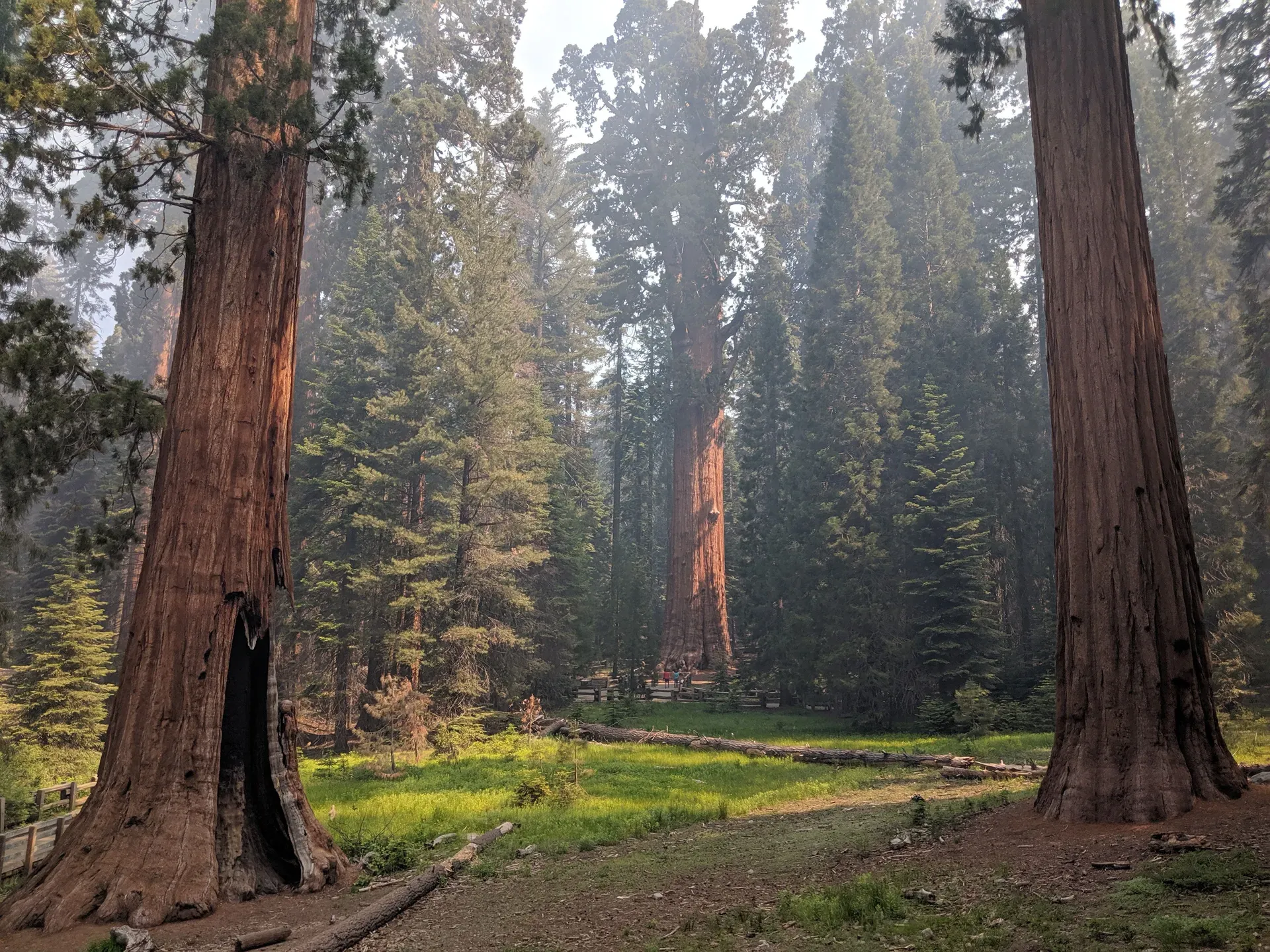
Sequoia National Park sits in California's southern Sierra Nevada, protecting the largest trees on Earth by volume. Established in 1890, it spans deep granite canyons and peaks reaching 14,494 feet at Mount Whitney.
Sequoia National Park occupies the southern Sierra Nevada mountains of California. It protects groves of giant sequoias, including the General Sherman Tree, which holds 52,508 cubic feet of wood and stands 274.9 feet tall. The terrain shifts drastically from 1,370-foot foothills to 14,494 feet at the summit of Mount Whitney, the highest point in the contiguous United States. Visitors walk paved trails through the Giant Forest, climb 400 concrete steps up the granite dome of Moro Rock, and drive through a fallen sequoia trunk on the Crescent Meadow Road.
The National Park Service jointly administers Sequoia and adjacent Kings Canyon National Park as a single 865,964-acre unit. Together they contain 866 miles of trails. Hikers use these paths to access 108 miles of the Pacific Crest Trail and 87 miles of the John Muir Trail. These routes cross alpine wilderness accessible only on foot or with stock animals. Backpackers need a wilderness permit for all overnight travel. Reservations open in advance on recreation.gov, and walk-up permits cost $15 plus $5 per person at trailhead ranger stations.
Winter snow closes high-elevation roads from December through March. During these months, tire chains are mandatory on the open routes, and areas like Mineral King and Cedar Grove shut down entirely. Summer brings heavy traffic to the main groves. A free shuttle system runs along four color-coded routes in the Giant Forest and Lodgepole areas to clear the congestion. That's the easiest way to get around in July. The park charges a $35 entrance fee for private vehicles, valid for up to seven days. Entrance stations don't accept cash, so bring a credit or debit card.
Black bears live throughout the park boundaries. They frequently break into vehicles or campsites to reach improperly stored food. Visitors must keep all food and scented items inside provided bear-proof metal boxes or canisters. Failure to secure these items results in fines. Watch bears from a distance of at least two city buses, and never approach them.
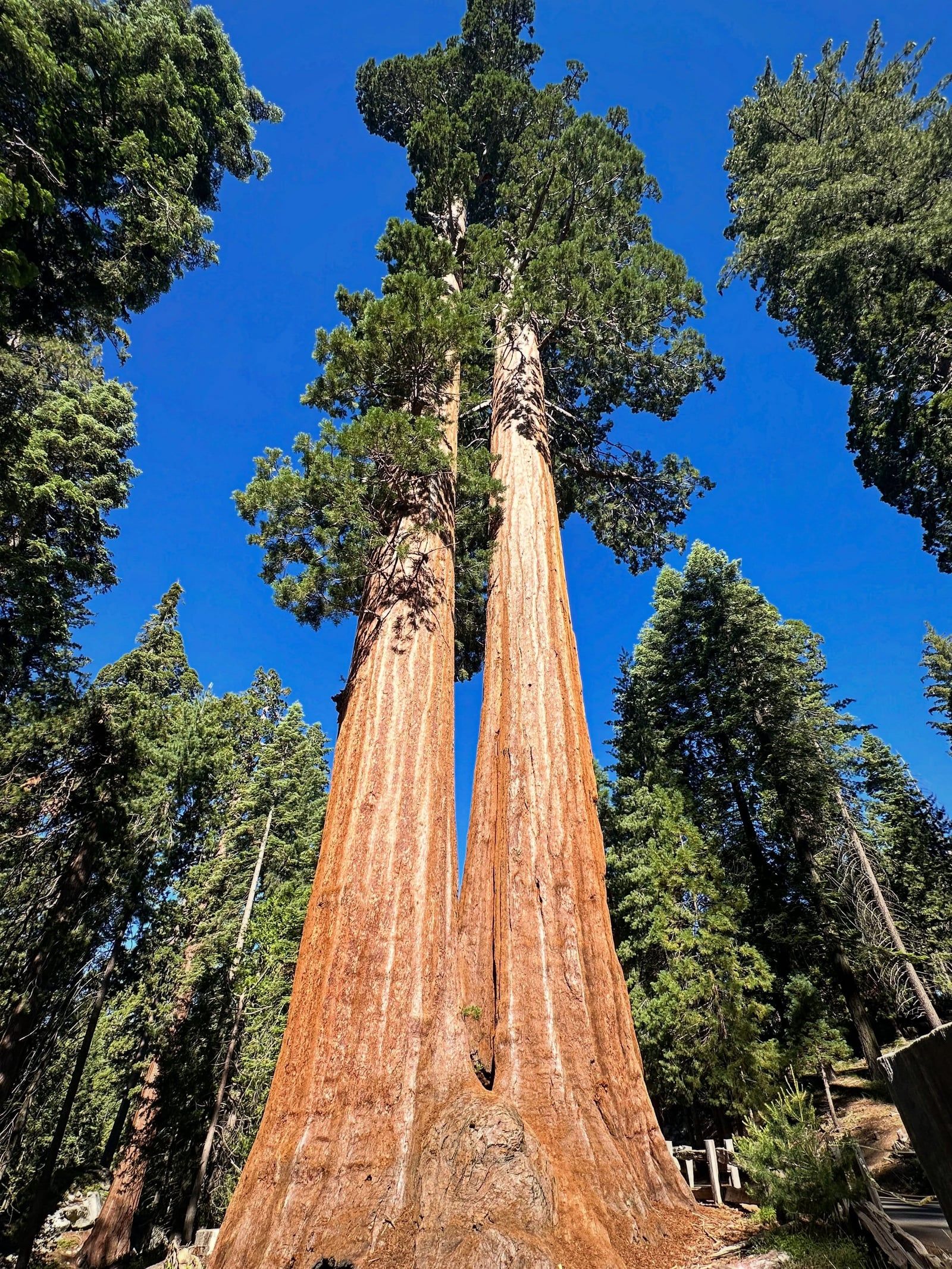
President Benjamin Harrison signed legislation creating Sequoia National Park on September 25, 1890. This made it America's second national park, established just after Yellowstone. The government formed it specifically to stop logging operations from cutting down the giant sequoia groves. It was the first national park created to protect a living organism. One week later, on October 1, Congress created the small General Grant National Park nearby to protect the General Grant Tree.
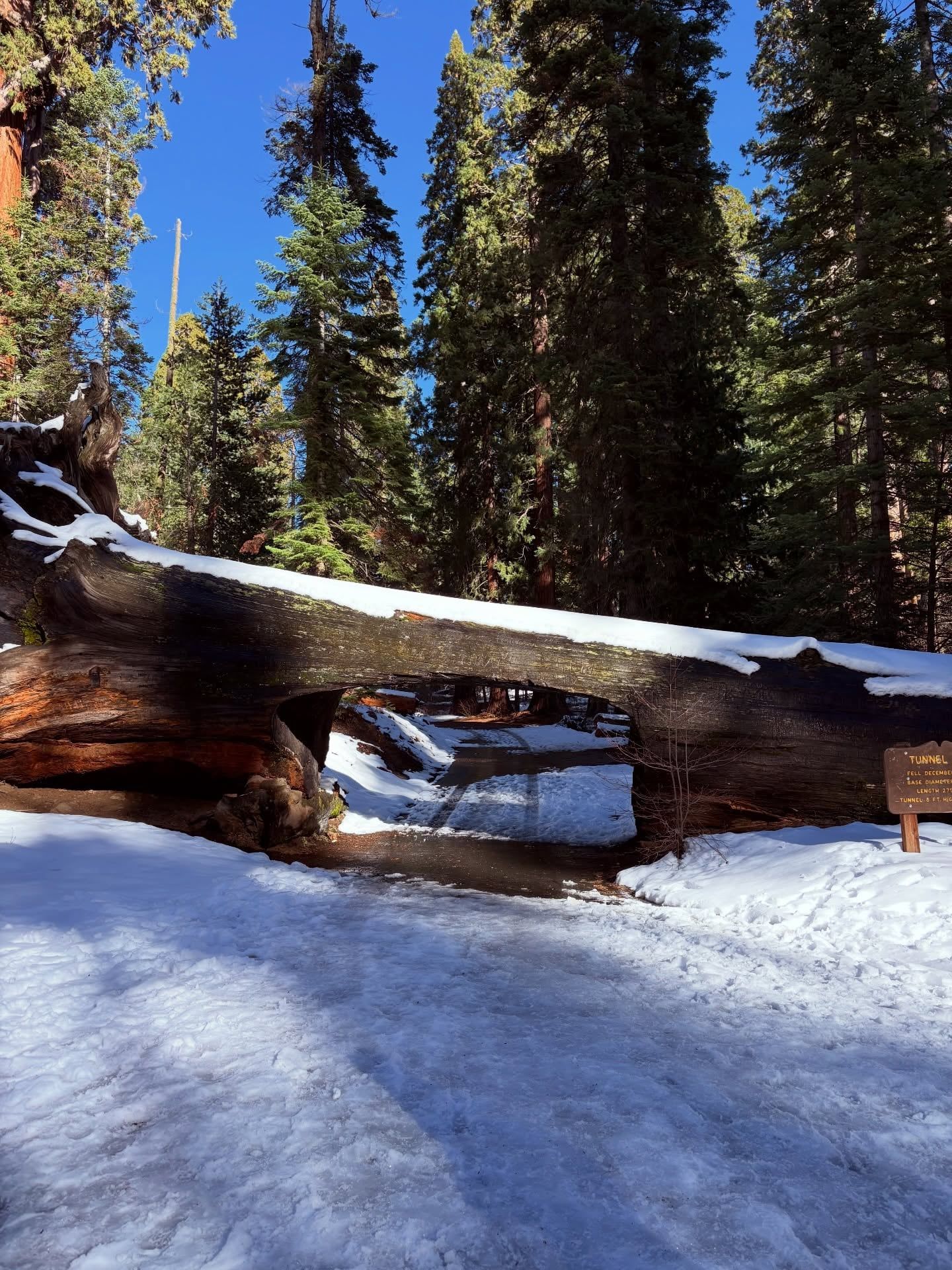
The original boundaries covered a much smaller footprint. On July 3, 1926, the federal government expanded Sequoia to include the Great Western Divide, Kern Canyon, and Mount Whitney. This pushed the park's eastern edge to the crest of the Sierra Nevada. In 1937, a giant sequoia fell across a park road. Workers cut a car-sized hole through the trunk rather than moving it, creating the Tunnel Log that drivers still pass through today.
Administrative changes followed in the 1940s. On March 4, 1940, Congress abolished General Grant National Park and folded its land into the new Kings Canyon National Park. The National Park Service began jointly administering Sequoia and Kings Canyon in 1943 to streamline operations. UNESCO designated the combined parks as an International Biosphere Reserve in 1976.
Today, the parks handle over two million recreation visits annually. This volume forced infrastructure changes, including the introduction of fare-free summer shuttles to reduce parking bottlenecks near the General Sherman Tree. Environmental pressures persist. Sudden spring snowstorms and swift river currents routinely catch hikers off guard. Drownings happen when visitors underestimate the cold Kaweah and Kings rivers. Check the daily water conditions at the Foothills Visitor Center before approaching the banks.
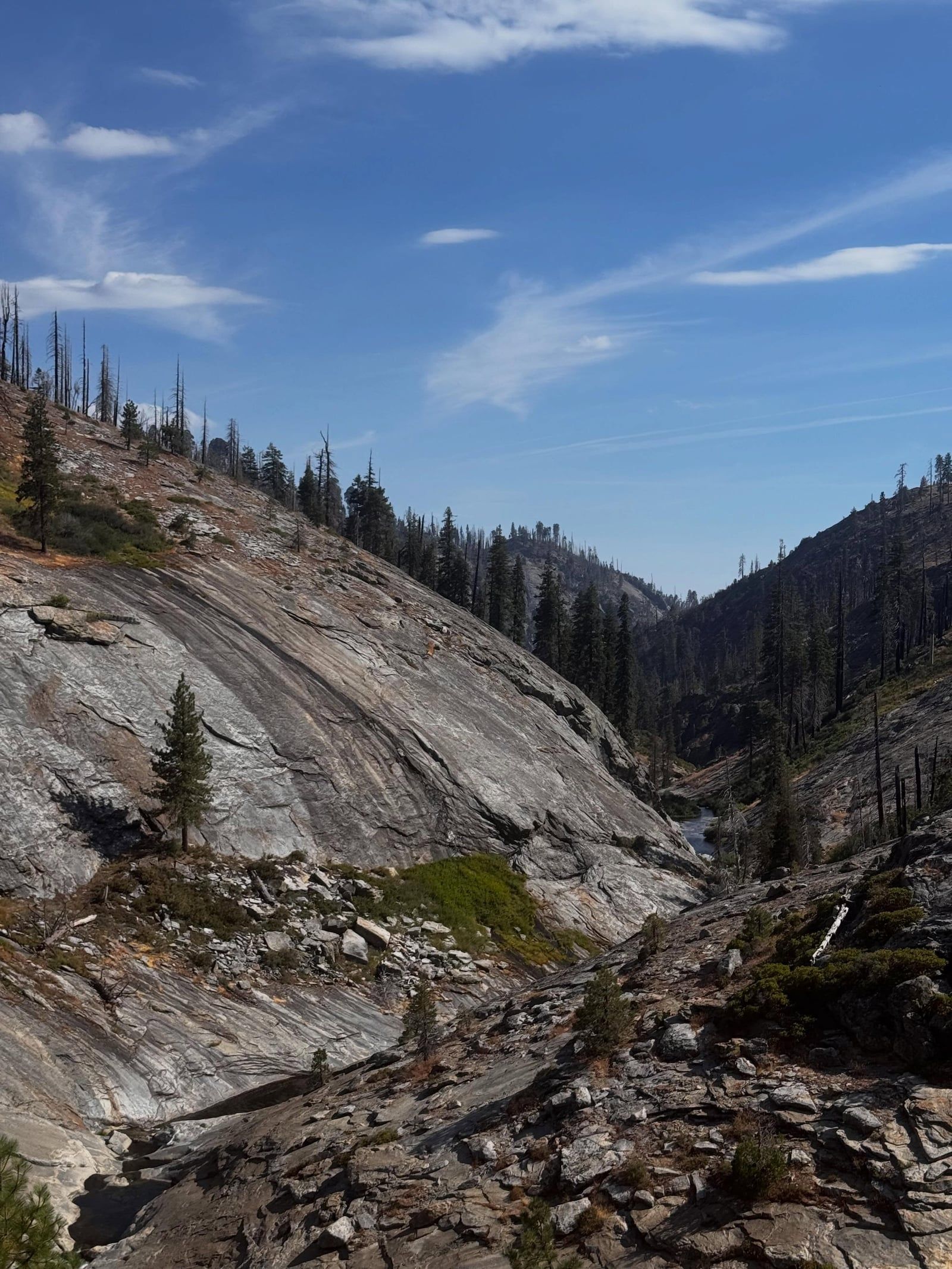
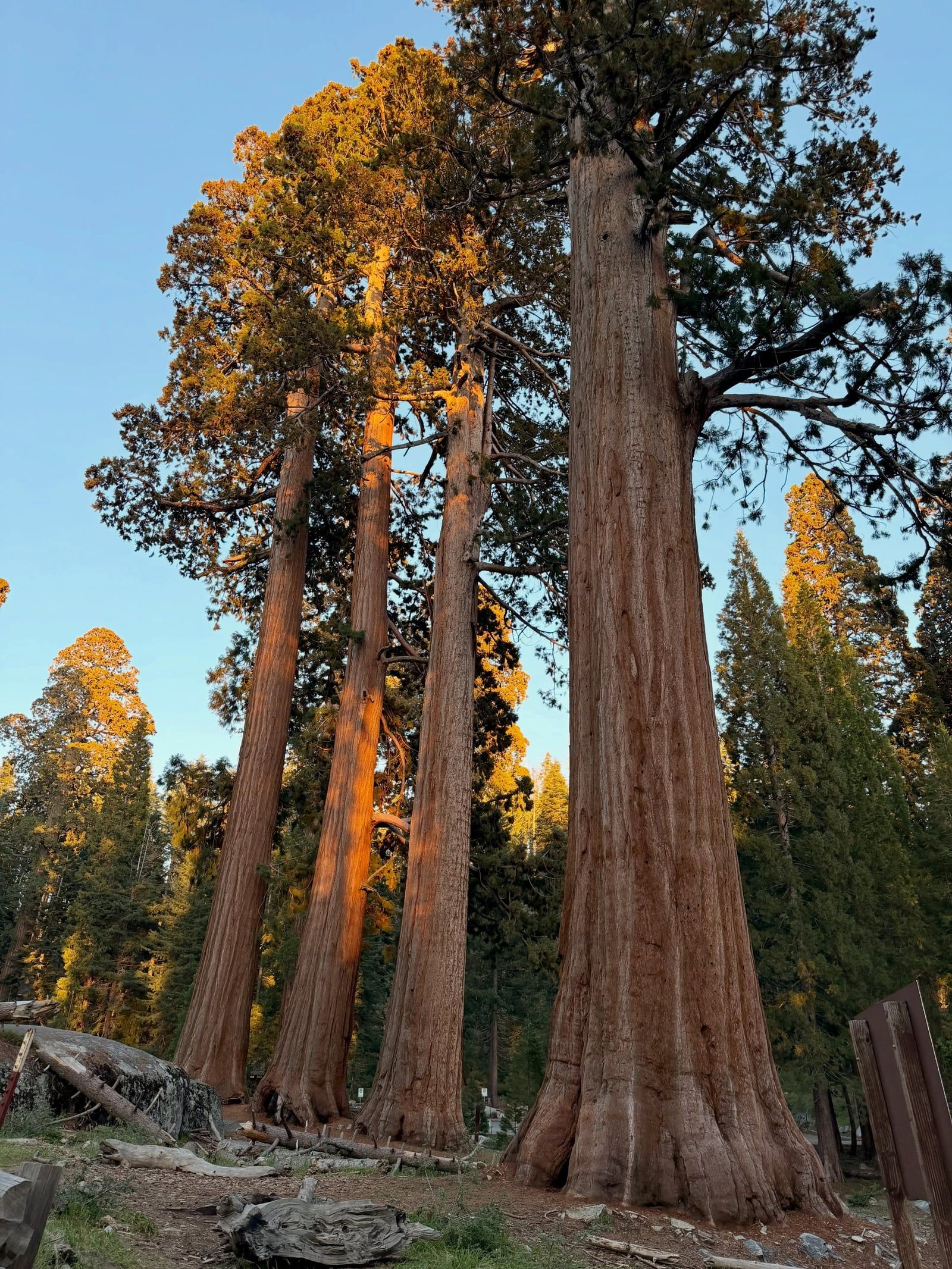
Sequoia National Park contains the largest unlogged sequoia grove on Earth, the Giant Forest. The General Sherman Tree dominates this area with a volume of 52,508 cubic feet and a height of 274.9 feet. A paved, 500-foot wheelchair-accessible trail leads directly to its base. The surrounding Congress Trail loops for two miles past other massive sequoias, including the President Tree. The trees survive at specific elevations where winter snowpack provides enough moisture for their shallow root systems.
Granite formations define the park's topography. Moro Rock, a 6,725-foot granite dome, rises above the Kaweah River canyon. Visitors reach the summit by climbing 400 concrete steps carved directly into the rock face. The top provides 360-degree views of the Great Western Divide. Below the surface, the park holds marble caverns. Crystal Cave features stalactites and stalagmites in an underground environment that stays at a constant 48 degrees Fahrenheit. A steep half-mile trail connects the parking area to the cave entrance. Ranger-led tours last 50 minutes, and tickets must be purchased in advance in the town of Three Rivers (you can't buy them at the cave).
The elevation gradient creates extreme temperature and weather variations. The foothills sit at 1,370 feet, while the eastern boundary peaks at 14,494 feet on Mount Whitney. This vertical mile-plus difference means visitors can experience summer heat at the Ash Mountain Entrance and freezing temperatures in the sequoia groves on the same day. The Generals Highway connects these zones. It features tight, twisting hairpin turns and steep drop-offs. RVs and vehicles over 22 feet long should avoid the Crystal Cave Road entirely.
Water shapes the lower elevations. The Kaweah and Kings rivers cut deep canyons through the rock. During the spring snowmelt, these waterways run fast and cold. Swimming is discouraged due to strong currents. Stick to the designated viewpoints along the paved roads.
Sequoia National Park shifted the American approach to land conservation. Before 1890, the federal government protected landscapes primarily for their geological features, as seen in Yellowstone. Sequoia was the first national park established specifically to protect a living organism. The legislation stopped commercial logging operations that were actively cutting down trees thousands of years old. This decision established a precedent for protecting biological ecosystems rather than just scenic rocks and geysers.
The giant sequoias hold specific cultural weight as natural monuments. The General Grant Tree in adjacent Kings Canyon carries the official title of the "Nation's Christmas Tree." The General Sherman Tree draws over two million visitors a year who walk the half-mile trail just to stand at its base. Naturalist John Muir spent extensive time in the area, famously naming Crescent Meadow the "Gem of the Sierra." His writings helped popularize the region and build public support for its protection.
Today, the park functions as a high-altitude training ground and wilderness retreat. Mountaineers use the Whitney Portal to attempt the highest summit in the contiguous United States. Backpackers spend weeks crossing the 108 miles of the Pacific Crest Trail that intersect the park. The landscape demands preparation. Altitude sickness frequently affects hikers above 8,000 feet, causing dizziness and dehydration. Ascend gradually and drink plenty of water.
Sequoia was the first national park created specifically to protect a living organism rather than a geological feature.
The General Sherman Tree contains 52,508 cubic feet of wood, making it the largest tree on Earth by volume.
The park's eastern boundary includes Mount Whitney, which at 14,494 feet is the tallest peak in the contiguous United States.
In 1937, a giant sequoia fell across a road, and workers cut a car-sized tunnel through it rather than moving the trunk.
Crystal Cave is a marble cavern that maintains a constant temperature of 48°F (9°C) year-round.
The park entrance stations only accept credit, debit, or mobile payments, completely phasing out cash transactions.
Launching, landing, or operating drones is strictly prohibited anywhere within the 865,964 acres of Sequoia and Kings Canyon.
A standard private vehicle entrance pass costs $35.00 and is valid for up to seven days. Pedestrians and cyclists pay $20.00 per person. The entrance stations do not accept cash.
The park is open 24 hours a day, 365 days a year. Visitor centers typically operate from 9 a.m. to 4:30 p.m., but winter storms can close specific roads without warning.
You can reach the General Sherman Tree via a paved, wheelchair-accessible half-mile trail from the main parking area off Wolverton Road. A shorter accessible path is available from a disability-placard parking lot along the Generals Highway.
Pets are not allowed on any park trails. You can keep them on a leash no longer than six feet in designated areas like campgrounds, parking lots, and paved roads.
Yes, a wilderness permit is required for all overnight travel outside designated campgrounds. You can reserve them on recreation.gov or get walk-up permits at ranger stations for $15 plus $5 per person.
The Ash Mountain Entrance is about 225 miles from the Los Angeles area. The drive takes roughly four hours via I-5 North, CA-99 North, and CA-198 East.
Yes, a paved 500-foot trail leads to the General Sherman Tree. Visitors can borrow free manual wheelchairs at the Giant Forest Museum or Lodgepole Visitor Center, and the summer shuttle buses are accessible.
Summer offers the most reliable access to all areas and comfortable temperatures in the sequoia groves. Fall and spring have fewer crowds, but high-elevation roads like Mineral King close outside the summer season.
No, the entrance stations only accept credit, debit, or digital payments like Apple Pay. You can only use cash at the Foothills and Kings Canyon Visitor Centers to buy a pass before entering.
Black bears are common and will break into vehicles for food. You must store all food and scented items in the provided bear-proof metal boxes to avoid fines.
Browse verified tours with free cancellation and instant confirmation.
Find Tours