Crystal Cave is the only cave in Sequoia and Kings Canyon National Parks you can tour, and the only way in is with a guide. The standard tour lasts 50 minutes, costs about $24 per adult, and follows a half-mile paved loop through a marble cavern beneath the Giant Forest — stalactites, folded curtains, fairy pools, and the stream that carved all of it.
The catch is logistics. Tickets are online-only, July and August dates sell out weeks ahead, and the whole visit eats half a day once you count the winding drive and the steep trail down. Here's how to decide whether it fits your trip — and how to book it if it does. For the rest of the park, our roundup of guided Sequoia tours covers the alternatives.
What Is Crystal Cave in Sequoia National Park?
Water did this. Crystal Cave is a marble solution cavern — mildly acidic groundwater dissolved the rock over millennia and left sculpted chambers behind. Fewer than one in ten caves worldwide form in marble, which alone makes it geologically odd for California.
Sequoia and Kings Canyon hold more than 200 known caves, including half of California's caves longer than a mile and the state's longest. Crystal Cave, discovered in 1918, is the only one developed for visitors: paved paths, solar-powered electric lights, and a half-mile loop that thousands walk each year. Every other cave in the parks is wild and permit-only.
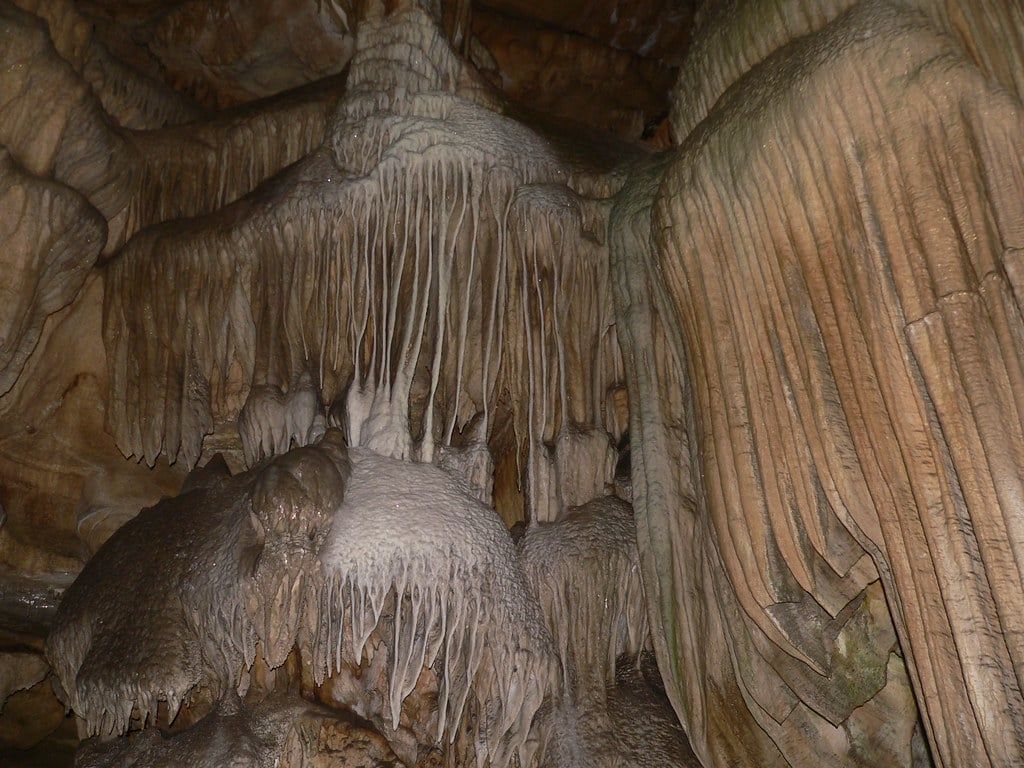
That half-mile loop is where you'll meet the signature sights — the steel spider-web gate at the entrance, Marble Hall (the largest room), icicle stalactites, hanging draperies, sheeting flowstone, and the fairy pools. Access stays guided for two reasons: the formations are fragile, and the cave shelters a protected bat population. A locked gate and a ticket are the only ways in.
Crystal Cave Tours, Tickets & Prices (What to Book and When)
Guided-only is the rule, and ticketing follows it. Sequoia Parks Conservancy (SPC) runs every tour and sells every ticket online — there's no booth, no ranger taking payment, no walk-up option at the cave. Purchases must be made at least 36 hours ahead, but that's the bare minimum: NPS recommends booking two months out, SPC says at least 30 days, and July–August dates sell out regardless. Miss your tour time and there's no refund.
The Standard Tour
Fifty minutes, a half-mile loop, about $24 per adult and $12 per child (2026 listing — confirm prices when you book). A Field Institute naturalist leads the group and stops at the formation highlights. This is the tour for nearly everyone.
The Wild Cave Tour
Six hours, roughly $255, capped at six adults. You leave the lit path and crawl, squeeze, and scramble through the undeveloped cave. It's for people who already know they love tight, muddy spaces.
One more line on the bill: your cave ticket doesn't cover park entry. A standard pass runs $20–$35 depending on how you arrive, and entrance stations take card only — our park hours and entry fees guide has the full breakdown.
When Is Crystal Cave Open? Season, Hours & Current Status
Tours run spring through fall, usually starting in late May, with departures roughly 9 am to 3 pm daily in high season. Exact dates shift every year, so treat any calendar — including this one — as a pattern, not a promise.
Recent seasons show the range. The 2025 season ran May 23–September 7. The announced 2026 season was May 22–November 1, but Crystal Cave Road closed September 8 for essential repairs, so the final tours ran September 7. NPS expects tours to resume in late spring 2027, with possible construction delays on the road during part of that season.
The instability has a history: the cave sat closed for roughly four years after the 2021 KNP Complex Fire and 2023 winter storms damaged the road, trail, and facilities. Before you build a day around it, confirm current dates on SPC's Crystal Cave calendar. For the bigger picture, our guide to the best time to visit Sequoia covers the rest of the park.
Getting to Crystal Cave: Directions, Drive Times & Parking
The cave sits at the end of the 6.5-mile Crystal Cave Road, which branches off Generals Highway near Giant Forest. From Foothills Visitor Center, drive 13 miles up Generals Highway and turn left onto Cave Road. From Lodgepole, it's 6.5 miles south, then a right onto the same road for another 6.5 miles.
Time it generously. SPC says to allow at least 1.5 hours from the Sequoia entrance station and 2 hours from Kings Canyon — and summer entrance lines can add an hour or more on weekends. There's no gas anywhere in the parks, so fill up in Three Rivers or before you enter.
Vehicles over 22 feet combined length (car plus trailer) can't use Crystal Cave Road, which is narrow and winding with sparse signage. The road closes one hour after the last tour of the day. Plan to arrive 15–20 minutes early and check in at the trailhead kiosk with your confirmation email. Coming from farther afield? Our directions to Sequoia National Park page lays out the routes.
The Trail to the Cave Entrance
Half a mile each way, dropping about 300 feet — paved but uneven, with several sets of stairs. Down takes 15–20 minutes. Up is the honest workout: SPC compares the stair climb to ascending a 20-story building, and that's the part people underestimate.
It's a good walk, though. Cascade Creek tumbles past near the entrance, interpretive signs line the route, and the spider-web steel gate at the cave mouth is the photo everyone takes.
Know the edges: poison oak grows along the trail, rattlesnakes and bees appear occasionally, and rockfall is possible after storms. Front-facing child carriers are allowed; backpack carriers and strollers aren't, and the trail can't take wheelchairs.
What the Crystal Cave Tour Is Actually Like
Your tour time is when you check in at the trailhead, not when you enter the cave. After a short orientation, you stash food and scented items in shared bear boxes, then step through a hydrogen peroxide shoe bath. That last step protects bats: white-nose syndrome, a fungal disease that has killed millions of bats in North America, is now in California, and gear worn in other caves can't come in here.
You walk down on your own. The guide meets the group at the spider-web gate, unlocks it, and the 50 minutes begin.
Inside, low amber lighting picks out white marble walls and the loop's stops: icicle-shaped stalactites and stubby stalagmites, folded draperies hanging like cloth, a dome with a whipped-cream texture, sheeting flowstone, and the shimmering fairy pools fed by an underground stream. Marble Hall, the largest room, is the finale before the gate. Tours often run a few minutes long — closer to 60 than 50 in practice.
Then the lights go out. Total darkness, the kind your eyes never adjust to, while the guide tells the cave's bat story. Bats live here but you'll rarely spot one. You won't need a headlamp, and you can't bring one — the cave is electrically lit.
What to Bring (and What to Leave Behind)
The cave holds a constant 50°F (10°C) — cold enough that summer shorts feel it within minutes. Dress in layers and wear non-slip, closed-toe shoes; the paved path is damp in spots. No water is sold at the cave, so pocket a bottle. Snacks are fine at the picnic tables by the parking lot, but everything scented goes into the bear boxes first, because black bears work this area.
- Backpacks, bags, and purses
- Trekking poles
- Tripods, monopods, and selfie sticks
- Baby backpack carriers and strollers
- Food and beverages
- Flashlights and headlamps
Photography is allowed — handheld personal shots only, with no flash and no video lights. Phones do best down here: brace against a railing, use night mode, and accept that Marble Hall's scale defeats most sensors.
Pets are banned outright: on the trail, in the cave, and in cars at the lot. The only restrooms are pit toilets at the parking area, so go before you descend — there's nothing on the trail or at the entrance.
Who Should Visit Crystal Cave (and Who Should Skip It)
Book it if you have a second day. Families with school-age kids, first-time cave visitors, and geology fans get the most out of it — the formations are unlike anything else in the Sierra, and Yosemite has nothing you can tour like this.
Think twice with severe claustrophobia, heart or respiratory conditions, recent surgery, or knee trouble. SPC's own guidance excludes all of these, and the 20-story-equivalent climb out is where visits fall apart.
It doesn't work for kids too young to walk (no strollers, no backpack carriers), for pets, or on a one-day trip. A single day in Sequoia belongs to the General Sherman Tree, the Congress Trail, and Moro Rock, full stop.
With two or more days, slot the cave into a morning on day two — earlier tours dodge both heat and crowds. Our two-day Sequoia itinerary shows exactly where it fits.
How Long Does a Crystal Cave Visit Take? (Plus Crystal Cave vs. Boyden Cavern)
NPS says plan on half a day, and the math agrees: 1.5–2 hours driving in, 15–20 minutes early for check-in, 15–20 minutes down the trail, 50–60 minutes underground, then the climb back. One visitor's logged trip ran 3 hours 15 minutes door-to-car — an 8:00 am departure from Potwisha for a 9:30 tour, back at the car by 11:15. Working backward from a 9:30 tour, leave the Foothills or Three Rivers area around 7:45. SPC figures you'll be away from your vehicle about two hours at the site itself.
So which cave — Crystal, or Boyden Cavern, the parks' other show cave over on Highway 180 in Kings Canyon?
| Crystal Cave | Boyden Cavern | |
|---|---|---|
| Tour length | 50 minutes (guided loop) | 45–60 minutes |
| Ticket price | ~$24 adult / $12 child | ~$8–17 |
| Booking | Online only, 36+ hours ahead | Daily 10 am–5 pm; no 36-hour booking window |
| Season | Late May–fall; dates shift yearly | Roughly late April–early November |
| Setting | Marble cavern off Generals Highway, Sequoia | Beneath 2,000-ft marble walls on Highway 180, Kings Canyon |
Pick Crystal Cave for the classic, family-friendly marble tour. Pick Boyden for spontaneity, cheaper tickets, or a day based on the Kings Canyon side. For how the two parks split more broadly, see our Kings Canyon vs. Sequoia comparison.
Nearby Attractions to Pair With Crystal Cave
The cave road already delivers you to the Giant Forest side of the park, so make the drive pay twice. The full list of things to do in Sequoia National Park is long; these are the stops that pair best with a cave morning.
General Sherman Tree and the Congress Trail
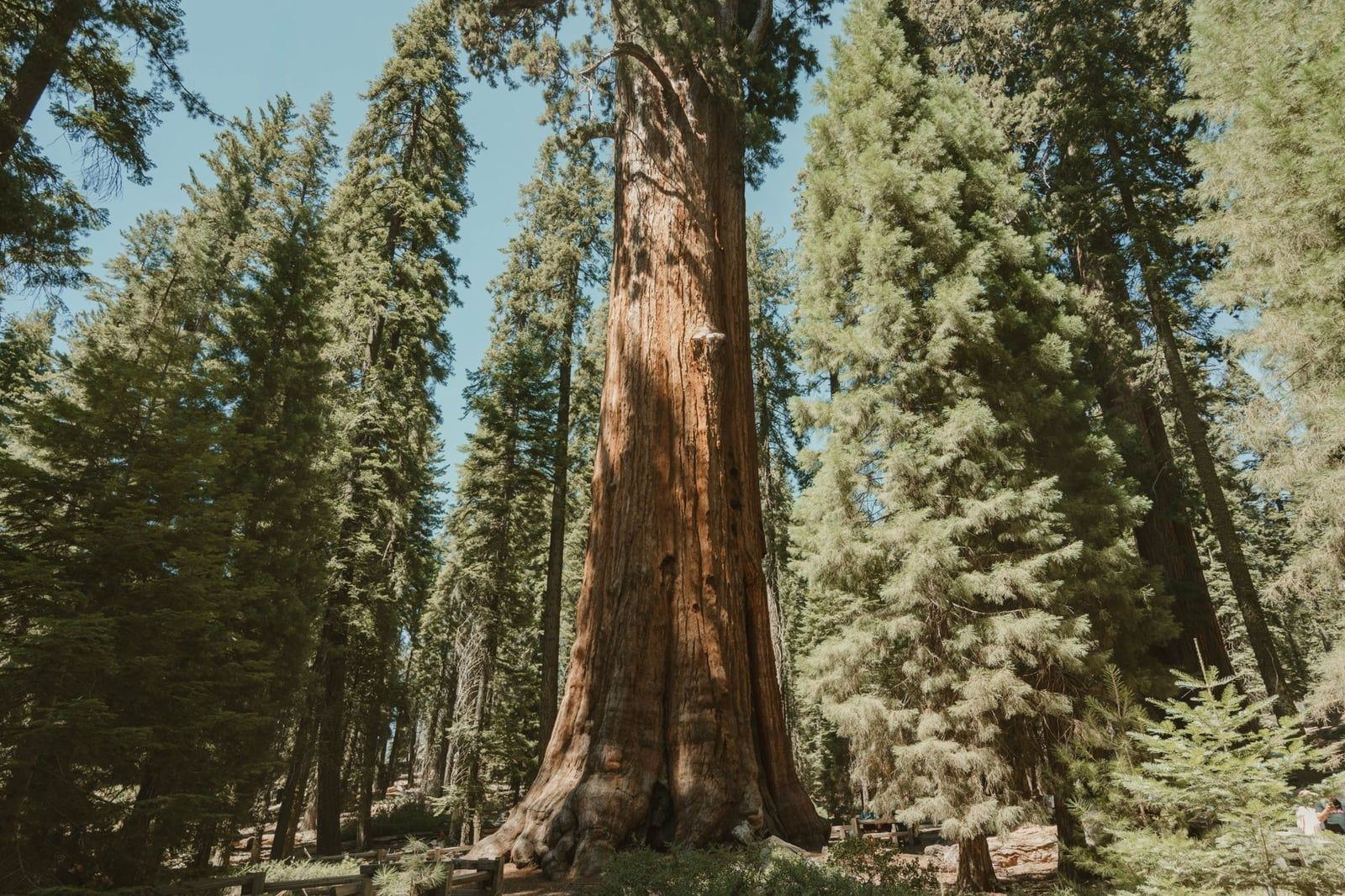
The largest tree on Earth by volume stands a short drive from the Lodgepole turnoff, on a paved half-mile trail. Add the roughly 2-mile Congress Trail loop to pass the President Tree and the Senate and House groups with thinner crowds.
Moro Rock and Crescent Meadow
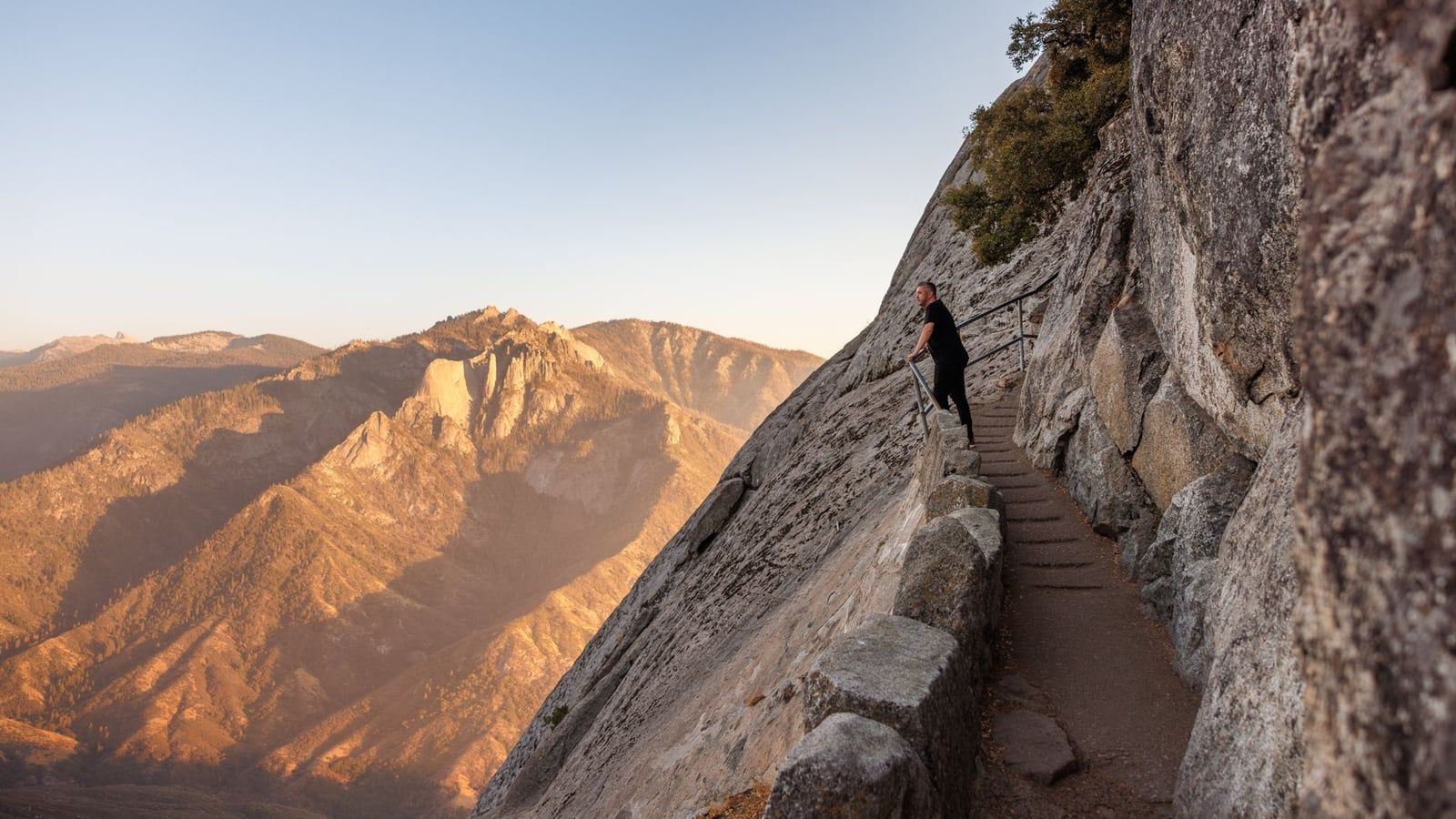
Moro Rock's 400 concrete steps climb a 6,725-foot granite dome to a view across the Great Western Divide. Nearby Crescent Meadow, the "Gem of the Sierra," is an easy loop that blooms with wildflowers in early summer.
Tokopah Falls and Giant Forest Museum
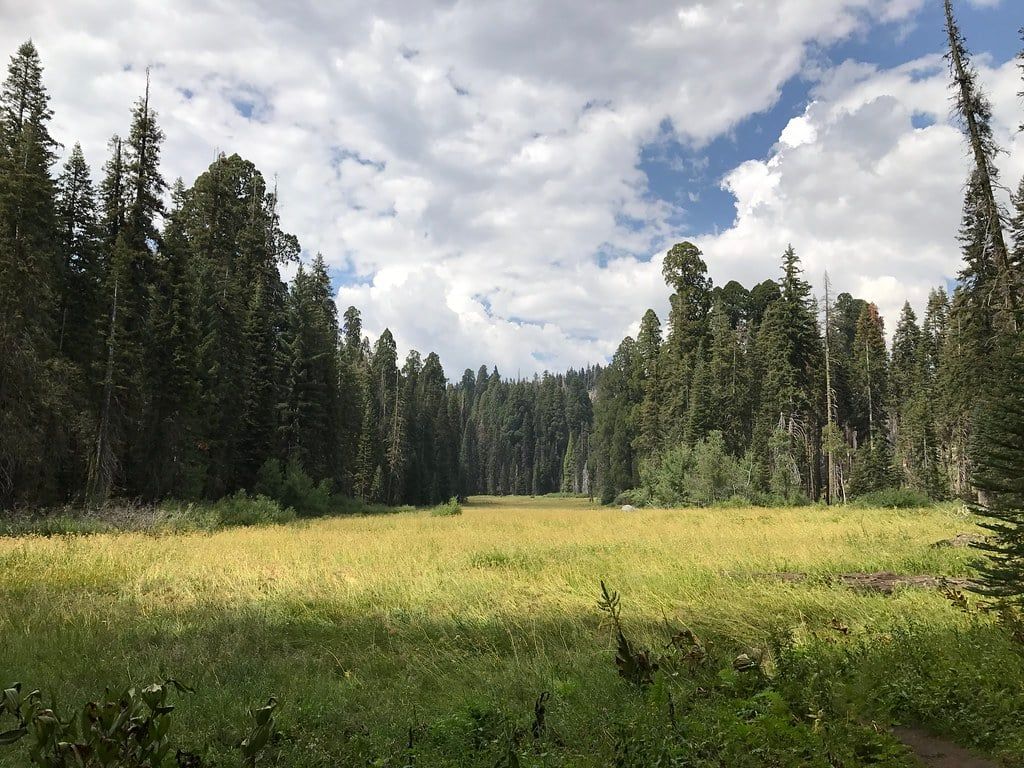
From Lodgepole, the Tokopah Falls Trail follows the river to a 1,200-foot cascade — one of the best hikes in Sequoia. The Giant Forest Museum sits right where you turn for the cave road, a good first or last stop.
The practical combo: a morning tour, lunch at the picnic tables, then one Giant Forest stop in the afternoon. From the cave lot it's about 40 minutes back toward the Giant Forest Museum, so don't plan two big stops after a tour.
Accessibility at Crystal Cave
Hearing support is the cave's quiet strength. Assistive Listening Devices amplify the guide through headphones or hearing aids, tablets with American Sign Language interpretive content are free, and you can request a live ASL interpreter ahead of time through the SPC Field Institute.
Mobility is the hard limit. The trail is paved but steep and stairred, and wheelchairs can't be accommodated — inside or out. The cave is dark, damp, and 50°F. If you're unsure about service-animal rules or any other need, contact SPC before booking rather than gambling at the gate.
Crystal Cave FAQs
Can you visit Crystal Cave without a tour?
No. Fragile formations and a protected bat population mean guided-only access, and every ticket is sold online by Sequoia Parks Conservancy. Nothing is available at the cave itself.
How much do Crystal Cave tickets cost?
The standard 50-minute tour is listed at $24 adult / $12 child (2026 listing; confirm when booking). The 6-hour Wild Cave Tour is $255 and adults-only. Park entry is separate at $20–$35, cashless at the gate.
When is Crystal Cave open?
Seasonally, spring through fall, with tours roughly 9 am–3 pm in peak season. The 2026 season was scheduled May 22–November 1 but ended September 7 when Crystal Cave Road closed for repairs; NPS expects tours to resume in late spring 2027, possibly with construction delays. Check the SPC calendar before you plan.
How long is the Crystal Cave tour?
The guided portion is 50 minutes over a half-mile loop. Budget about half a day all-in — realistically 3–4 hours door-to-car including the drive.
How hard is the hike to Crystal Cave?
Half a mile each way, steep, about 300 feet down, paved but uneven, with stairs. Down takes 15–20 minutes; SPC compares the climb back up to a 20-story building.
Is Crystal Cave good for kids?
Yes for kids who can walk the trail themselves. Children too young to walk aren't recommended, and strollers and baby backpacks are prohibited — front-facing carriers are fine.
Is Crystal Cave claustrophobic?
Rarely on the standard tour, which sticks to large lit chambers like Marble Hall. Still, SPC advises anyone with claustrophobia to skip it, and the Wild Cave Tour involves genuinely tight passages.
What should you wear and bring to Crystal Cave?
Layers for a constant 50°F, non-slip closed-toe shoes, and water — none is sold at the cave. Leave backpacks, trekking poles, tripods, strollers, food, and pets behind; flash and flashlights are both prohibited inside.