They are two different national parks — and for most of the year you should stop agonizing and visit both. Sequoia and Kings Canyon share a border in the southern Sierra Nevada, the National Park Service runs them as a single unit, and one $35-per-vehicle pass gets you into each for seven days. There is no second gate between them; you drive straight from one into the other on Generals Highway.
The real question is how to split your time, because the two parks feel nothing alike behind the wheel. Sequoia packs its icons — the General Sherman Tree, Moro Rock, Tunnel Log — into one drive-able corridor with a free summer shuttle. Kings Canyon asks for a 50-mile commitment down a dead-end byway and pays you back with the deepest canyon in the United States and trails you'll have largely to yourself.
Sequoia vs. Kings Canyon at a Glance
Kings Canyon is the bigger park at roughly 722 square miles to Sequoia's 631 — together they cover 865,964 acres, 97% of it designated wilderness. But the headline contrast isn't size. Sequoia holds the General Sherman Tree, the largest tree on Earth by volume at 274.9 feet tall and 52,508 cubic feet. Kings Canyon holds the deepest canyon in the United States, dropping about 8,200 feet from rim to river — deeper than Idaho's Hell's Canyon.
| Sequoia | Kings Canyon | |
|---|---|---|
| Size | 631 sq mi | 722 sq mi |
| Headline sight | General Sherman Tree, largest on Earth by volume | Kings Canyon, ~8,200 ft deep — deepest in the US |
| Crowds | Hour-plus lines at Ash Mountain in summer; busy Giant Forest lots | Big Stump entrance rarely has a line; quiet trails |
| Driving | Tight hairpins climbing to Giant Forest | 50-mile winding byway into Cedar Grove (1.5–2 hrs each way) |
| Shuttle | Free summer shuttle in Giant Forest and Lodgepole | None — everything is drive-up |
| Best for | First-timers and walk-up icons | Scenery seekers, hikers, crowd-avoiders |
If you only read this far: pick Sequoia for a first trip or a single day, because more of what you came for sits next to the road. Pick Kings Canyon if you've seen the big trees, want canyon walls, or hate queues. And if you have two days, do both — the fee already covers it.
How the Two Parks Work as One (Borders, Fees, and Entrances)
Congress created Sequoia on September 25, 1890 — America's second national park after Yellowstone, and the first established to protect a living organism. Kings Canyon arrived in 1940, absorbing the smaller General Grant National Park, and the two have been jointly administered since 1943. One entrance fee covers both: $35 per vehicle or $20 per person on foot or bicycle, valid for seven days. No reservations or timed entry are required, and the entrance stations take card or mobile payment only — no cash.
You enter through one of two stations. Ash Mountain (Highway 198, from Visalia and Three Rivers) serves Sequoia; Big Stump (Highway 180, from Fresno) serves Kings Canyon. Whichever you choose, you can drive into the other park with no further checkpoint — roughly an hour separates the two visitor centers on Generals Highway. For route details from your starting city, see our directions to Sequoia National Park.
One caution about the drive: the full route from Big Stump through Grant Grove and out to Ash Mountain takes five to six hours without stopping. These are slow, winding mountain roads. Build that into any plan that touches both parks in a day.
What Sequoia National Park Does Best
Sequoia's advantage is density: nearly everything a first-timer wants sits in or near the Giant Forest, reachable on short paved paths. The park's areas run from the low-elevation Foothills and Hospital Rock up through Giant Forest, Lodgepole, and Wuksachi, with Mineral King as a separate road for the backcountry-minded. A free summer shuttle loops the Giant Forest and Lodgepole stops, so you can park once and hop between trailheads — details in our complete guide to things to do in Sequoia.
General Sherman and the Giant Forest
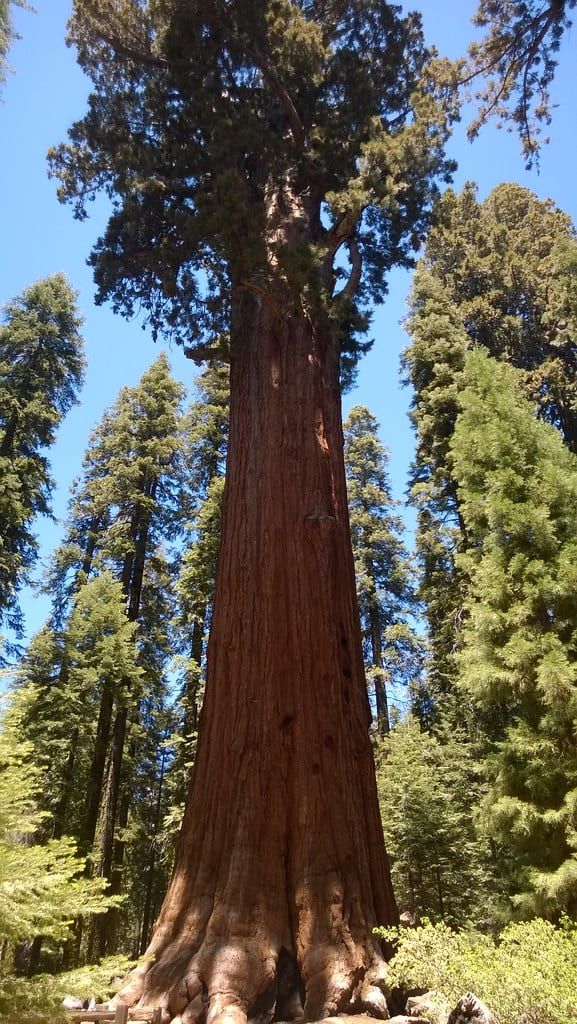
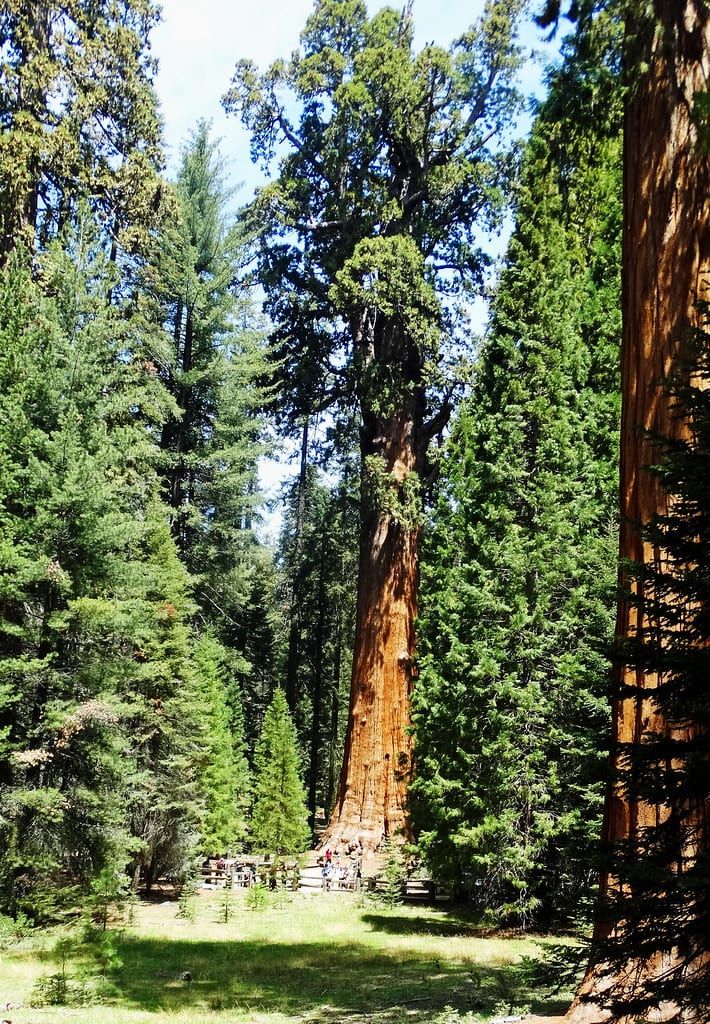
The General Sherman Tree is the largest living thing on Earth by volume: 274.9 feet tall, more than 2,000 years old, and still growing. A paved half-mile trail descends from the main lot on Wolverton Road (an accessible 500-foot path serves a placard lot closer in), and the Congress Trail continues from there as a roughly two-mile loop past named giants including the President Tree.
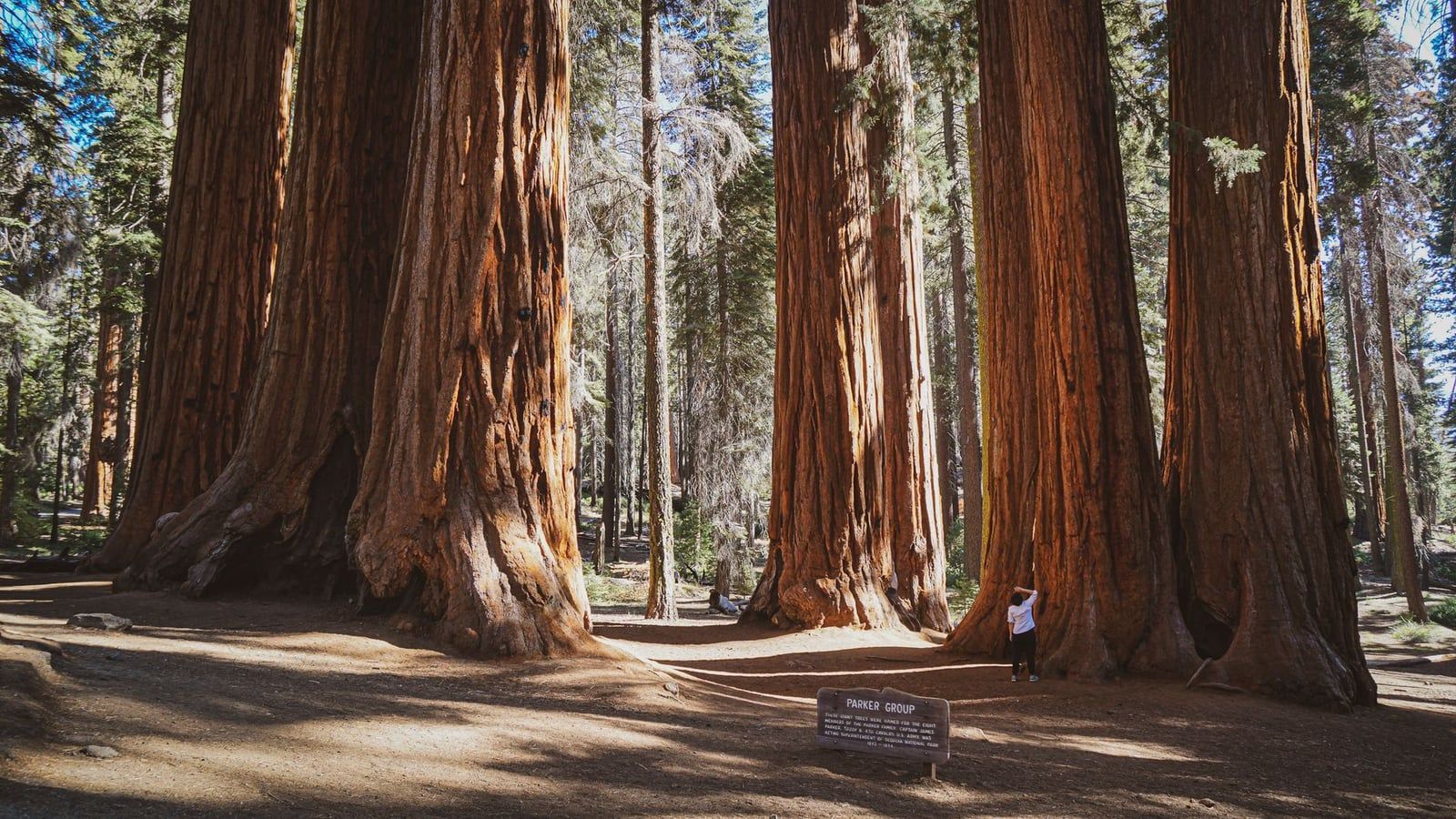
Around it spreads the Giant Forest, the largest unlogged sequoia grove anywhere. Sequoias grow naturally only on the Sierra's western slope between roughly 5,000 and 8,000 feet, and they need fire — their cones open with heat, their seedlings germinate in burnt clearings. That dependency turned tragic in 2020, when the Castle Fire killed an estimated 10–14% of the Sierra's large sequoias, a reminder that these groves are more fragile than they look.
Moro Rock, Tunnel Log, and Crescent Meadow
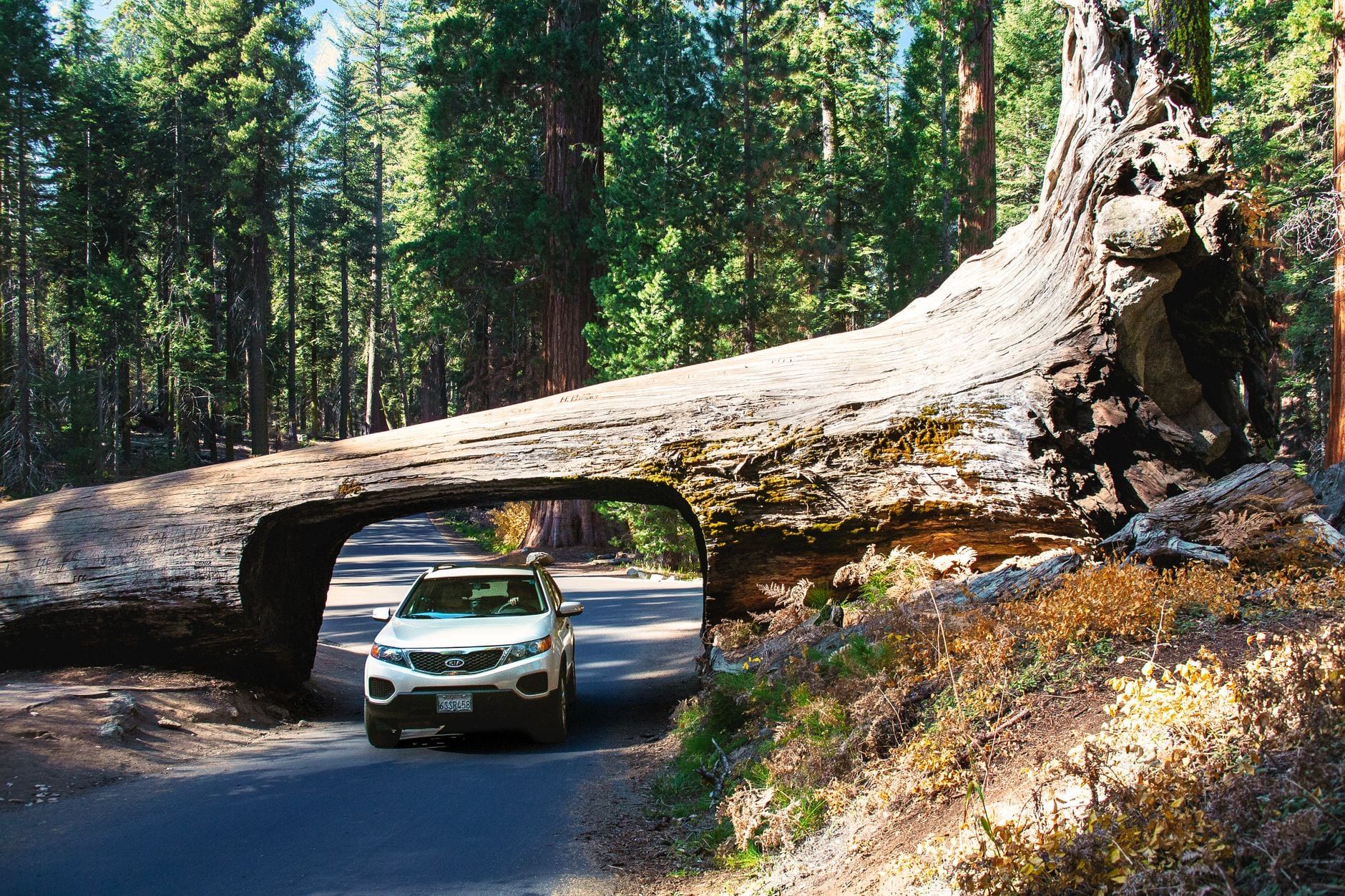
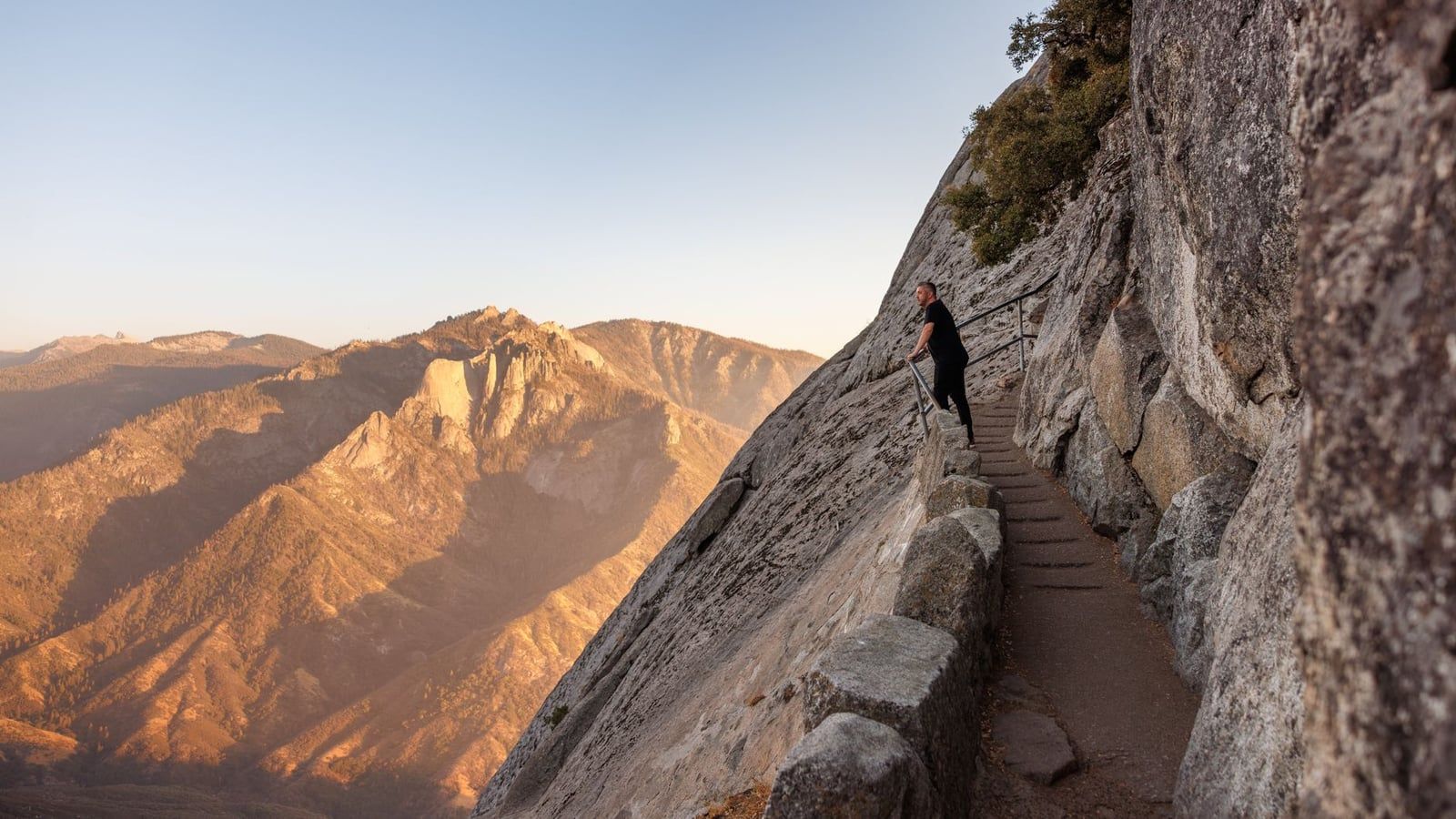
Moro Rock is a 6,725-foot granite dome with a 400-step stairway bolted up its face. The climb takes twenty minutes and ends with a full sweep of the Great Western Divide — go at sunrise or sunset, when the stairs thin out. Back down at road level, you can drive through the Tunnel Log, a 275-foot giant that fell in 1937 and was cut for traffic, and walk the easy loop around Crescent Meadow, which John Muir called the "Gem of the Sierra."
Crystal Cave and Mineral King
Crystal Cave is the showpiece cavern of the two parks: a marble cave at a constant 48°F, toured with a ranger for about 50 minutes. Tickets must be bought in advance in Three Rivers — none are sold at the cave — and the walk down from the parking area is a steep half mile. We cover tickets and logistics in our Crystal Cave guide. Kings Canyon's answer, Boyden Cavern, is a smaller, privately operated operation on the byway.
Mineral King, a dead-end valley reached by its own steep road, is Sequoia's quiet corner — trailheads for the high country, open spring through fall. Skip it on a short visit.
What Kings Canyon National Park Does Best
Kings Canyon trades icon density for scale. Its two districts sit at opposite ends of the experience: Grant Grove, up at 6,600 feet next to the highway, and Cedar Grove, at the bottom of a 28-mile one-way descent that most day-trippers never make. Those who do get granite walls a half-mile high and a river running through it — Sequoia has nothing to match it.
Grant Grove and the General Grant Tree
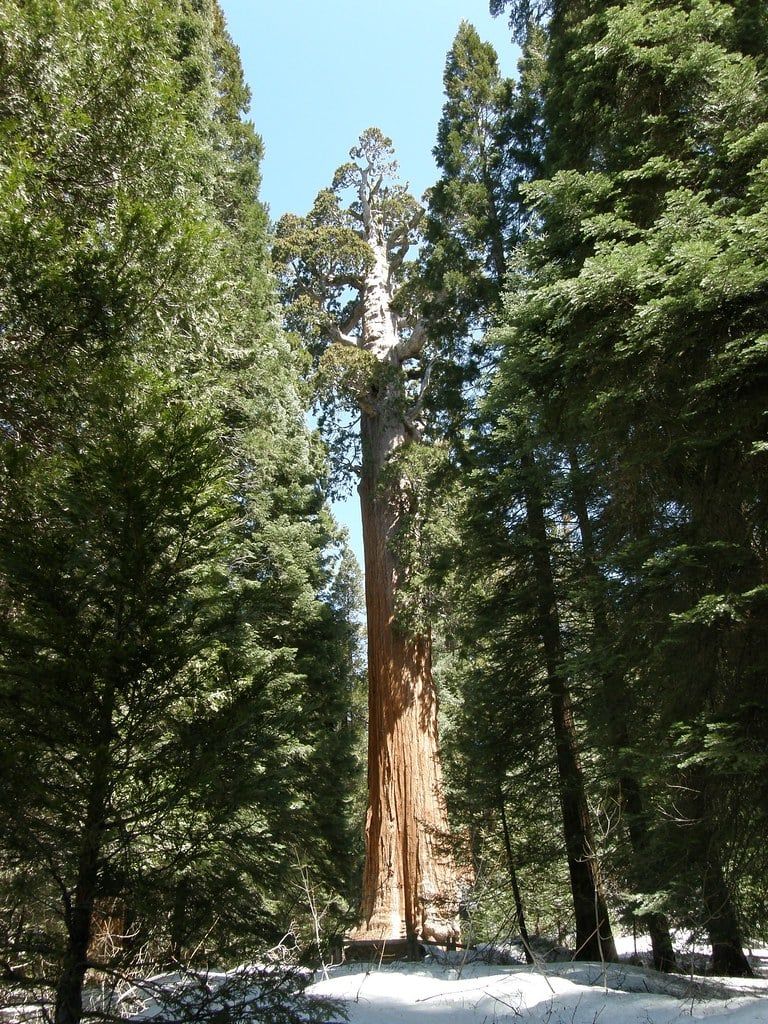
The General Grant Tree is the second-largest tree on Earth and the easiest giant in either park to see: a 0.7-mile paved loop from the parking area. Calvin Coolidge named it the Nation's Christmas Tree in 1926, and Dwight Eisenhower made it a National Shrine in 1956 — the only living shrine in the United States. Grant Grove also holds quieter trails through the grove, and Panoramic Point, a 7,520-foot overlook reached by a short paved walk, gives you the canyon without the drive down.
The Kings Canyon Scenic Byway
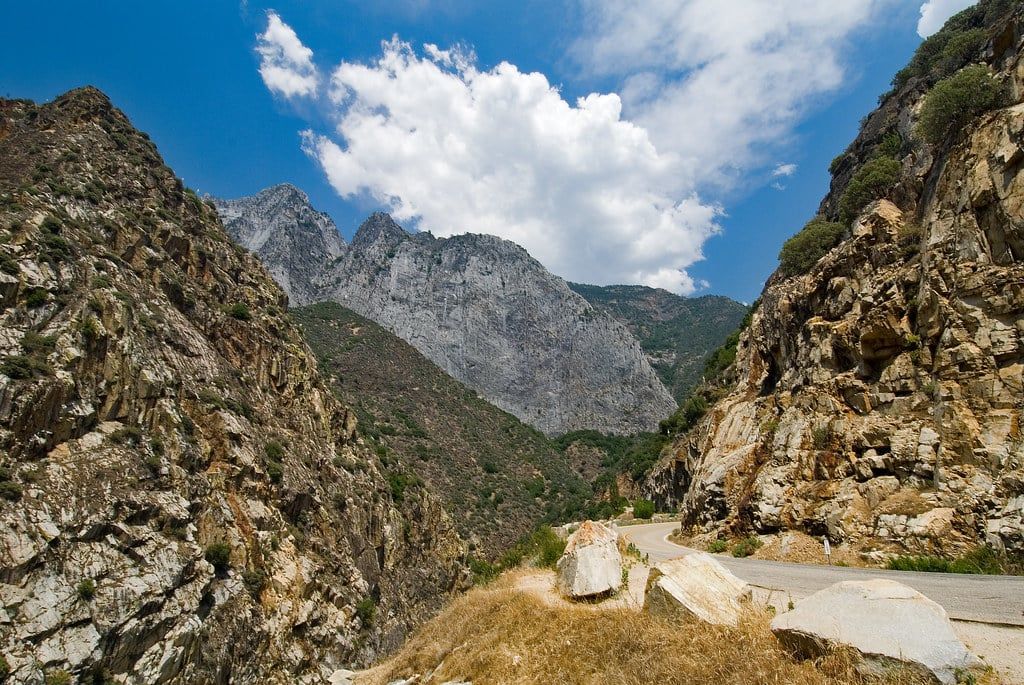
Highway 180 drops 50 miles from Grant Grove into Cedar Grove, dead-ending at Roads End. It is not a through route — 1.5 to 2 hours each way without stops — so it's a commitment, not a detour. The payoff is the canyon itself: about 8,200 feet from the South Fork Kings River to the rim, the deepest canyon in the country, with granite walls that recall a quieter Yosemite Valley.
Cedar Grove: Zumwalt Meadow and the Falls
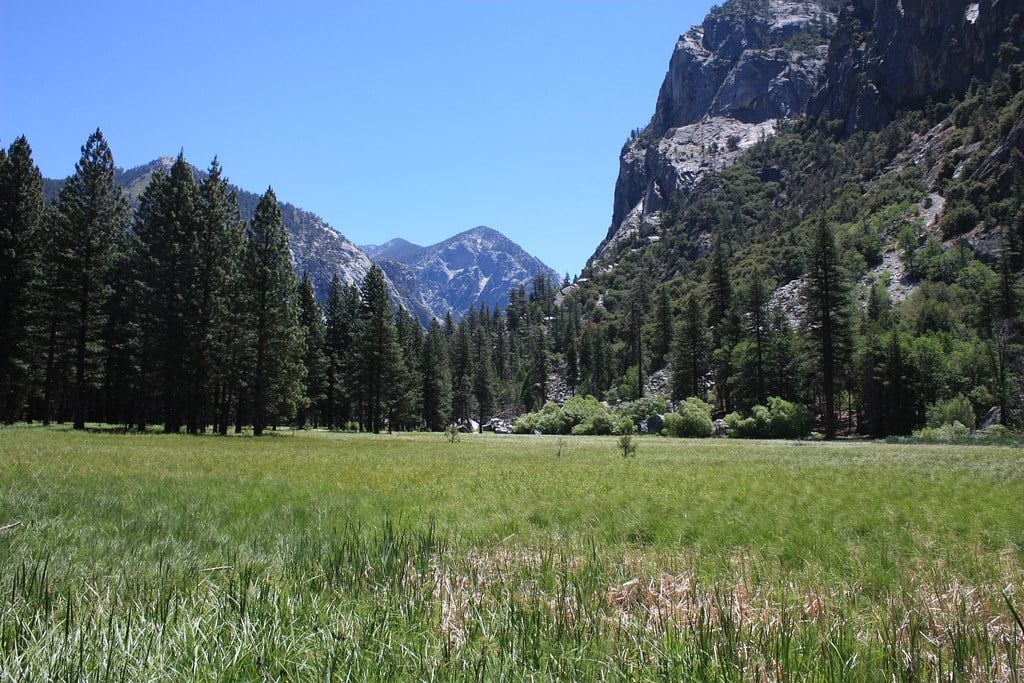
Cedar Grove's sights come cheap in effort. Roaring River Falls is a short paved walk to a slot of white water; Grizzly Falls sits about 100 feet from the road; Muir Rock is a riverside slab you can lounge on. Zumwalt Meadow, the classic walk, is currently out-and-back rather than a loop because flood damage closed part of the trail. Hikers should aim further: Mist Falls, 8–9 miles round trip, is the best day hike in either park, and the Rae Lakes country beyond is why backpackers rank Kings Canyon over Sequoia — our best-hikes guide covers the standouts.
Families short on canyon stamina can break at Hume Lake, a Forest Service swimming and boating spot about 11 miles from Grant Grove Village.
Crowds, Driving, and Logistics Compared
Sequoia gets the crowds, Kings Canyon gets the calm. The Ash Mountain line can exceed an hour on summer weekends and holidays between 9 a.m. and 1 p.m. — enter by 8 a.m. or after 2 p.m. and the wait mostly disappears. Big Stump rarely has a line at all, which is reason enough to base yourself on the Kings Canyon side during peak season.
The driving styles differ too. Generals Highway climbs from Ash Mountain to Giant Forest through tight hairpins and steep drop-offs; RVs and long vehicles are discouraged on it, and passengers prone to motion sickness will notice. The Kings Canyon byway is long and winding but gentler, with the river as a companion rather than a drop below you.
The shuttle gap matters if you'd rather not drive at all. Sequoia runs free shuttles around Giant Forest and Lodgepole in summer and on holiday periods, wheelchair accessible, hitting the major trailheads and museums. Kings Canyon has nothing — you drive to everything. In both parks, cell service is spotty to nonexistent, so download offline maps before you climb into the foothills.
Winter changes the whole calculus. The Highway 180 road into Cedar Grove closes for the season (the area typically runs May to mid-November), and from roughly early January to late March the stretch of Generals Highway between the parks is not maintained, so the "do both" strategy collapses into two separate out-and-back trips. Chains may be required at any time in winter and spring. Our winter guide to Sequoia covers what stays open.
Which Park Should You Choose? A Verdict by Trip Style
There is no single winner — there's a winner for your trip. Match your situation below.
One day, first visit: Sequoia, without much debate. Sherman, Moro Rock, and Tunnel Log stack up along a few miles of road, and the shuttle covers the parking crunch. You'll see more per hour here than anywhere else in the Sierra.
Both parks, one day: Possible, and worth it. Spend the morning to mid-afternoon in Sequoia and the rest in Kings Canyon at Grant Grove and Panoramic Point, skipping Cedar Grove. Enter through Ash Mountain if you're based south, Big Stump if you're coming from Fresno. If the hairpins and hour-long lines put you off, guided tours of the parks handle the driving.
Families with young kids: Sequoia for the walk-up giants and shuttle; Kings Canyon if your crew prefers short flat stops — the Grant Tree loop, Roaring River Falls, and a swim at Hume Lake. Either works. Sequoia has more toilets, food, and ranger programs when a meltdown is scheduled.
Hikers and backpackers: Kings Canyon. Mist Falls, the Rae Lakes Loop, and 866 miles of trails — including 87 miles of the John Muir Trail and 108 of the Pacific Crest — make it the hiker's park. Sequoia's Mineral King and the High Sierra Trail compete, but the trailheads are harder to reach.
Crowd-avoiders and repeat visitors: Kings Canyon, midweek, in late September or October. You'll share Zumwalt Meadow with a handful of people instead of the busloads at Crescent Meadow.
Winter visitors: Sequoia, in practice. Grant Grove stays open for snowshoeing and the Grant Tree loop, but Cedar Grove's road closes and the connecting highway stops being maintained. Plan on one park, not two.
How Many Days You Need (and Where to Base Yourself)
One day buys you a scenic-drive highlights tour of both parks — Sherman, Grant Grove, overlooks, no hikes longer than an hour. Two days is the standard split that most travelers land on: Day 1 in Sequoia for General Sherman, the Congress Trail, Moro Rock, and Crescent Meadow; Day 2 in Kings Canyon for Grant Grove, Panoramic Point, and the byway into Cedar Grove. Three days lets you add a real hike — Mist Falls or something out of Mineral King — without watching the clock. Our Sequoia itinerary guide lays out the day-by-day detail.
Where you sleep should follow your split. Grant Grove is the midpoint: John Muir Lodge runs from about $300 a night in peak season and the Grant Grove Cabins sit beside it, putting you between both parks rather than inside one. Wuksachi Lodge, the stone-and-timber hotel near Giant Forest, suits a Sequoia-focused stay. Cedar Grove Lodge, from around $220, only makes sense if you're committing to the canyon — it's a long way back up. The value play is Lodgepole Campground: 214 sites at 6,700 feet, two miles from Giant Forest, with a free shuttle stop in summer.
Outside the parks, Three Rivers is the gateway on the Sequoia side, Visalia sits about 45 minutes from Ash Mountain, and Fresno — the biggest city in the region and the closest airport — is an hour-plus to Big Stump. Base in Fresno or Visalia only if you have one day; otherwise stay in or between the parks.
When to Go, What It Costs, and Rules to Know
Mid-to-late June is the sweet spot: trails are mostly snow-free, the full road network is open, and you beat the wildfire smoke that typically ramps up by mid-July. The parks are open 24 hours a day, year-round, but the Cedar Grove road runs only about May to mid-November, and winter brings chain controls and closures. Our season-by-season guide goes deeper on weather and crowds.
Cost is simple: $35 per vehicle or $20 per person covers both parks for seven days. If your trip includes a third national park within the year, the $80 America the Beautiful pass pays for itself. Both parks drew just over two million visits combined in 2023, concentrated in summer — another argument for June or fall.
Three rules catch visitors off guard. Bear spray is prohibited in both parks; this is black bear country, and the required precaution is storing all food, trash, and scented items in the bear boxes at campsites and picnic areas. Pets are allowed on paved roads, in campgrounds, and in picnic areas, but not on any trail. And permits are needed only for overnight wilderness trips ($15 per permit plus $5 per person) and fishing — day visits need nothing but the entrance pass.
Frequently asked questions
Are Sequoia and Kings Canyon the same park?
No. They are two separate national parks that share a border and have been jointly managed by the National Park Service since 1943. One entrance fee — $35 per vehicle, valid seven days — covers both, and you can drive between them with no second gate.
Can you visit Sequoia and Kings Canyon in one day?
Yes, for the highlights: a full day in Sequoia (General Sherman, Moro Rock, Tunnel Log) plus a half day in Kings Canyon (Grant Grove, Panoramic Point). Driving both parks end-to-end takes five to six hours without stops, so skip Cedar Grove on a one-day plan.
How far apart are Sequoia and Kings Canyon National Parks?
They share a border — zero feet apart. It takes roughly an hour to drive between the two visitor centers on the winding Generals Highway.
Which park is better for first-time visitors?
Sequoia. The Giant Forest icons need little or no hiking, a free shuttle runs in summer, and most first-trip priorities sit along one highway corridor.
Which park has the biggest trees?
Both have giant sequoia groves. Sequoia holds the General Sherman Tree, the largest on Earth by volume at 274.9 feet tall; Kings Canyon's General Grant Tree is the second-largest and is the Nation's Christmas Tree.
Do I need a reservation to enter Sequoia or Kings Canyon?
No — neither park requires reservations or timed entry. Entry is $35 per vehicle or $20 per person on foot or bike, valid for both parks for seven days. Note that entrance stations accept card and mobile payment only, and the Ash Mountain line can exceed an hour on summer mornings.
Is bear spray allowed in Sequoia and Kings Canyon?
No — bear spray is prohibited in both parks. These are black bears; the required precaution is storing all food and scented items in the bear-proof boxes provided at campsites and picnic areas.
What is the best month to visit Sequoia and Kings Canyon?
Mid-to-late June: trails are mostly snow-free and wildfire smoke usually hasn't arrived. The full road network, including the Cedar Grove road, typically runs from early May to mid-November; in winter, Cedar Grove closes and chains may be required.