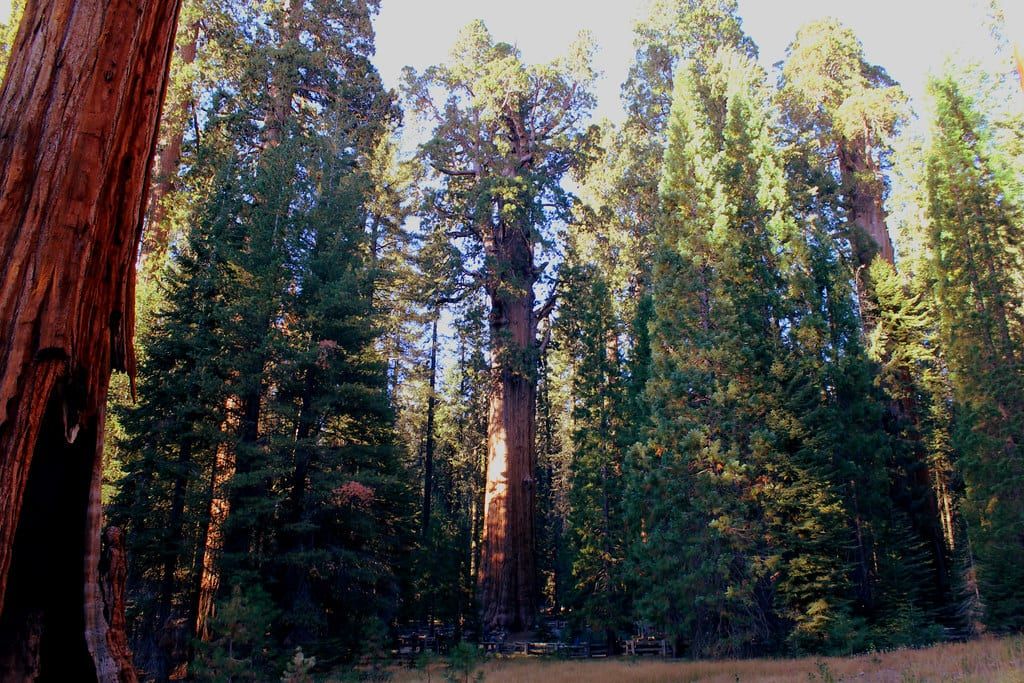
California grows the two heaviest, tallest living things on the planet, and it put a national park around each of them. Sequoia National Park, on the western slope of the Sierra Nevada, protects giant sequoias — the widest trees on Earth. Redwood National and State Parks, on the fog-drenched north coast, protects coast redwoods — the tallest. Most travelers have time for one, not both, and the parks sit more than 300 miles apart with completely different weather, trails, and fees.
This guide settles the choice: how the trees actually differ, what each park costs, when to go, and what you'll do once you're there. For background on the sequoia side, start with our introduction to Sequoia National Park.
Sequoia vs Redwood: The Quick Answer
Choose Sequoia if you want maximum tree for minimum effort. The General Sherman Tree — the largest living thing on Earth by volume at 52,508 cubic feet — sits at the end of a paved, half-mile trail, and the park has lodges you can sleep in. Choose Redwood if you'd rather trade convenience for solitude and coast: no entrance fee, no crowds to speak of, fog-shrouded groves, and the Pacific a few minutes from the trailheads.
| Attribute | Sequoia & Kings Canyon | Redwood National and State Parks |
|---|---|---|
| Record tree | General Sherman: largest by volume (52,508 cu ft, 274.9 ft tall) | Hyperion: tallest at 379.7 ft (location kept secret) |
| Tree character | Widest — bases up to ~30 ft across | Tallest — up to ~380 ft |
| Entry fee | $35/vehicle, valid 1–7 days, cashless | None; some state-park lots ~$12 |
| Nearest major airport | Fresno (FAT), ~1 h 45 m to the entrance | ~6-hour drive from San Francisco (SFO) |
| Best season | May–October | Year-round |
| Days needed | 1 (2 with Kings Canyon) | 2 |
One botanical hook before the details: both parks hold redwoods in the loose sense. Coast redwoods and giant sequoias belong to the same subfamily, Sequoioideae, but to different genera — they're cousins, and giant sequoias were once called "Sierra redwoods." Whatever you call them, the parks around them feel nothing alike.
Redwoods vs Sequoias: Two Different Giants
They are not the same tree. The coast redwood is Sequoia sempervirens, a fog-belt species that grows in a narrow strip along the Pacific from central California to just over the Oregon border. The giant sequoia is Sequoiadendron giganteum, a mountain species confined to the western Sierra Nevada between roughly 4,000 and 8,000 feet, scattered across about 70 groves covering some 48,000 acres.
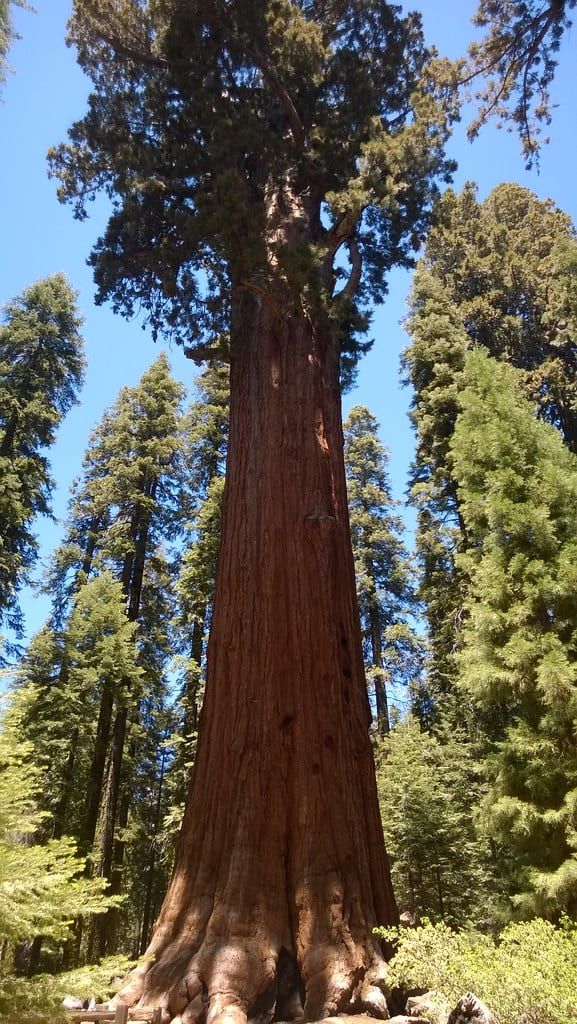
Each holds a world record in a different event. Redwoods are the tallest trees alive, reaching about 380 feet; the champion, a tree called Hyperion, measures 379.7 feet, and rangers keep its location secret — hikers who go looking can be fined. Giant sequoias rarely top 320 feet (the tallest is about 311), but no tree on Earth holds more wood. The General Sherman Tree in Sequoia's Giant Forest carries 52,508 cubic feet of trunk and spans more than 36 feet at the base. An average sequoia base runs about 30 feet across; an average redwood, about 15.
You can tell them apart in seconds once you know the trick. Redwood cones are under an inch long; sequoia cones are the size of a chicken egg — the size of the tree, inverted. Redwood foliage is flat and feathery; sequoia needles are short, sharp, and clasping. Sequoia bark is the giveaway from a distance: furrowed, spongy, and cinnamon-orange.
Age is another split. Redwoods live roughly 800 to 1,500 years. Some sequoias have been growing for at least 2,000 years, with the oldest estimates around 3,200 — trees that were already ancient when Rome fell.
The uncomfortable news: both species are shadows of their former range, and recent fire has made the sequoia situation urgent. Old-growth coast redwoods now cover about 110,000 acres, roughly 5 percent of the original 2.2 million. Only about 26,000 acres of giant sequoias remain, and nearly 20 percent of all mature sequoias have been killed by extreme fire in the past decade. If seeing the biggest ones standing matters to you, don't file this trip under someday.
Which feels bigger in person? The redwoods. Height is nearly impossible to judge from the ground — a 300-foot trunk disappears into canopy — but girth reads instantly. Standing at the base of General Sherman, looking up a wall of wood wider than a city bus is long, is the single more disorienting tree encounter in California. Most visitors who've seen both say the same.
Where Each Park Is and How to Get There
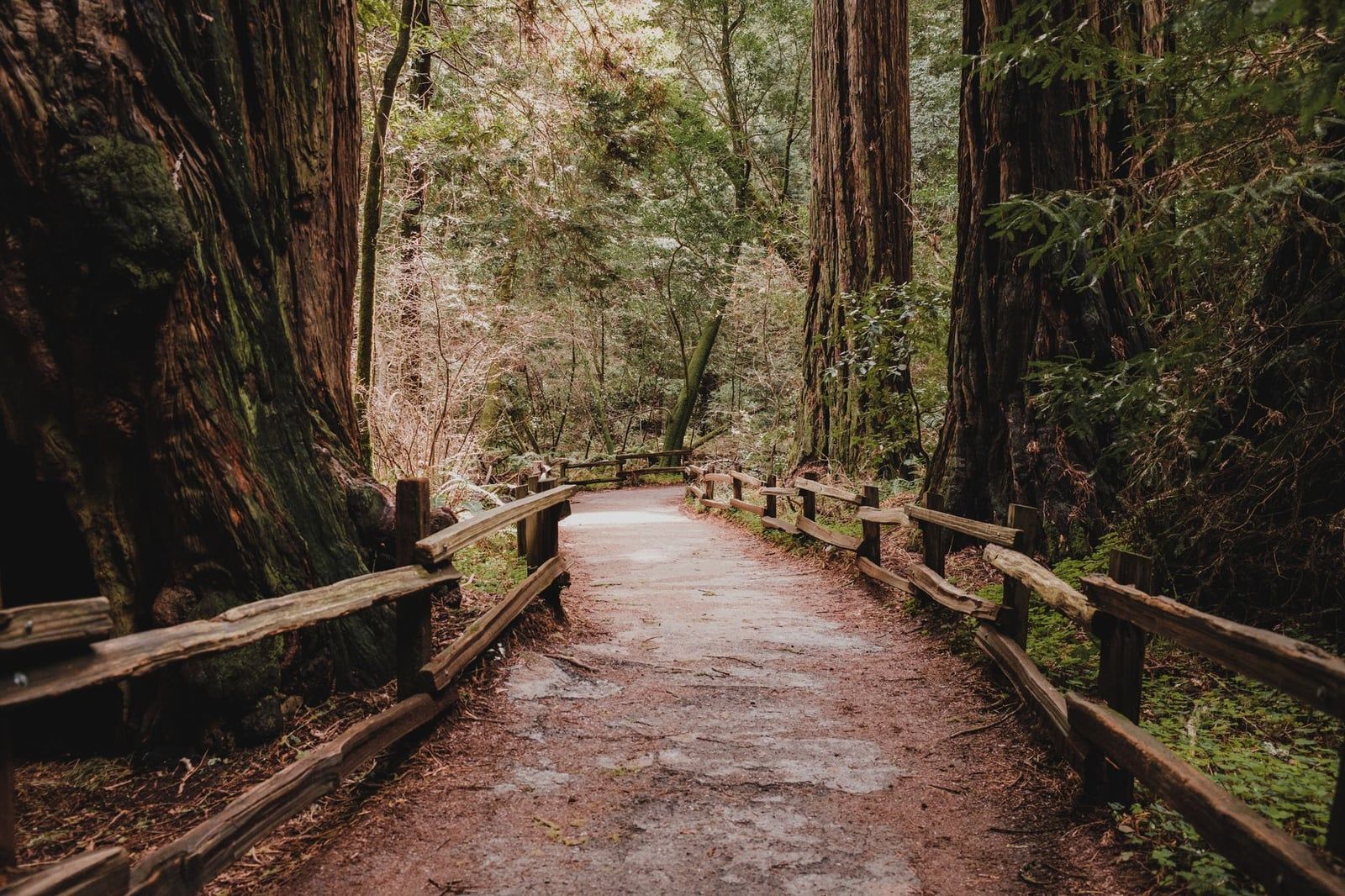
Geography decides this comparison for a lot of trips. Sequoia National Park sits in the southern Sierra Nevada, about 3.5 hours by car from San Francisco International and about 4 hours from the Los Angeles area — our route guides cover driving from San Francisco and the route from Los Angeles in detail. Fresno Yosemite International is the closest major airport, roughly an hour and 45 minutes from the Ash Mountain entrance. Redwood National and State Parks sit on the far north coast, near the Oregon line — about a 6-hour drive from SFO, and longer from almost anywhere else in the state.
The gap between the parks is the real constraint. They sit more than 300 miles apart, and even driving between the closest groves takes four to five hours. On a short California trip, plan one park properly rather than sprinting between both.
Gateway towns differ just as much. Sequoia's are Visalia — the last sizable city, 45 minutes from the entrance — and the small town of Three Rivers at the park boundary. Redwood's are Trinidad, Klamath, and Orick, all low-key coastal hamlets less than 30 minutes from the nearest trails. One park pulls you up a mountain highway; the other keeps you on Highway 101 and the coast.
Fees, Crowds, and Getting In
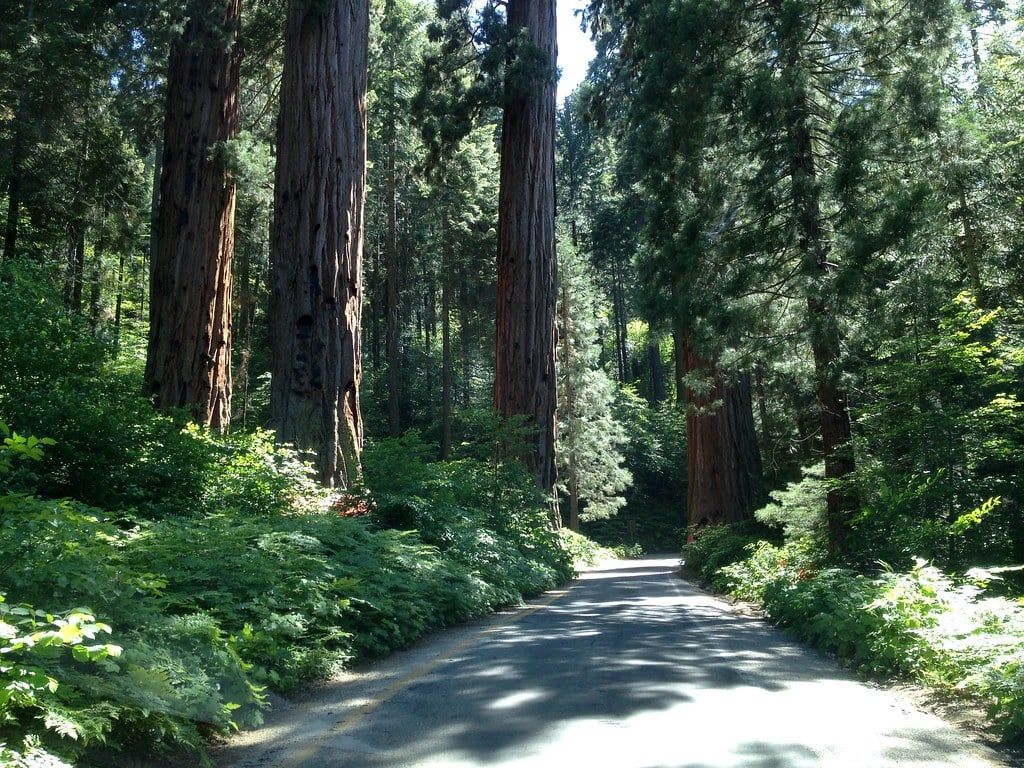
Redwood is free. There's no entrance station and no fee to enter the national park portions; a few adjoining state-park areas, like the Fern Canyon corridor, charge roughly $12 for day-use parking. Sequoia and Kings Canyon charge $35 per private vehicle, valid 1–7 days and covering both parks, with motorcycles at $30 and pedestrians or cyclists at $20 per person. The park is cashless at entrance stations — bring a card, or buy a pass in advance (the details are on our hours and fees page). An annual park pass runs $70, an America the Beautiful pass $80, and the park waives entry on several free entrance days each year. One quirk worth knowing: non-US residents 16 and older pay an extra $100 per person at Sequoia.
Permits matter at Redwood, not Sequoia. The Tall Trees Grove — one of the finest old-growth stands anywhere — requires a free timed-entry permit plus a 4.5-mile round-trip hike with 800 feet of elevation change. Hyperion has no legal access at all; its location is unpublished and approaching it draws fines. At Sequoia, the famous trees require no permit of any kind.
Crowds are Sequoia's weak point. Summer fills the Giant Forest parking lots, so arrive before 9 a.m. or after 3 p.m., and favor weekdays. Redwood's groves are spread out across the fog country and stay noticeably quieter even in August.
Car-free travelers have exactly one option. Sequoia runs a free shuttle around Giant Forest and Lodgepole in summer, with a color-coded route system reaching major trailheads, and a paid Sequoia Shuttle connects from Visalia in season. Redwood has no transit at all; without a car, you're stuck.
Best Time to Visit: Weather and Seasons
Sequoia runs on a mountain calendar. May through October is the reliable window, when every area of the park is open; summer brings warm, sunny days with highs in the 80s °F at grove elevation. From November to April, snow locks out parts of the park — winters drop to the 20s °F, roads close until plowed, tire chains can be required at any time, and high-country areas like Mineral King and Cedar Grove shut entirely. July and August are the most crowded months. There's a real off-season appeal, though: our season-by-season guide covers the trade-offs, and Sequoia in winter has its own quiet, snowbound following.
Redwood runs on an ocean calendar: mild, gray, and open all year. Temperatures usually sit in the 50s and low 60s °F, with a July average high around 65 and fog that can swallow a grove by afternoon. Rain is possible even in summer, and November through January average 9 to 11 inches of it. Pack a rain shell in any month.
Fire season is the modern asterisk on the Sierra side. Check conditions before you travel in late summer and fall — smoke can close groves, and burned stretches are now part of the sequoia landscape.
Things to Do in Each Park
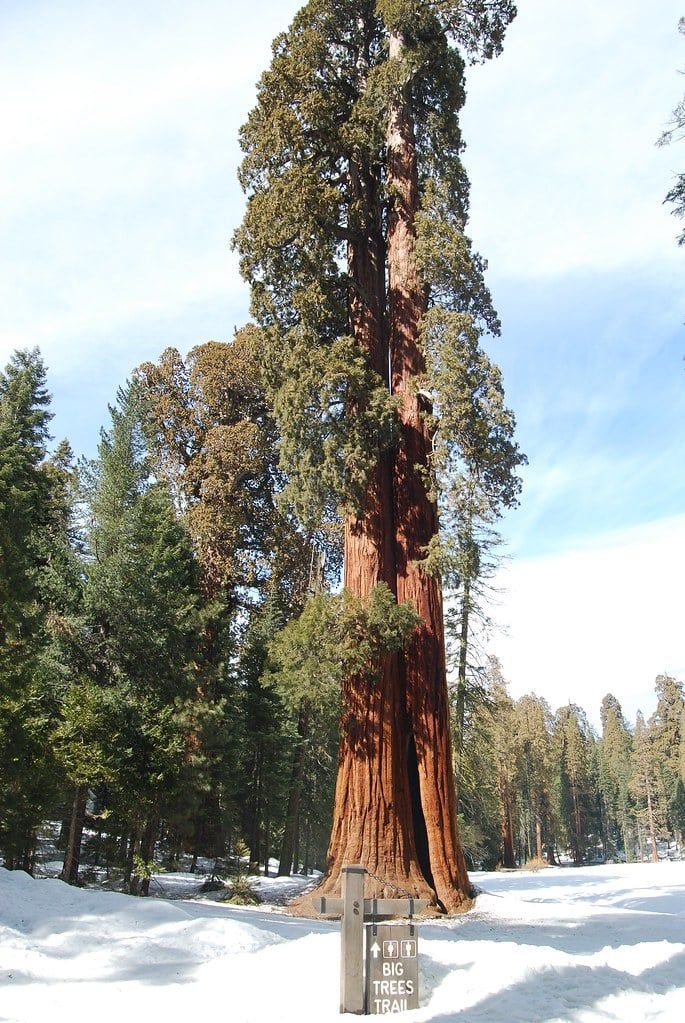
The clearest contrast here is effort. Sequoia puts its most famous trees at the end of flat walks; Redwood hides its best groves behind hikes measured in miles. Everything else — scenery, wildlife, side attractions — flows from that difference.
Sequoia: famous trees, flat trails
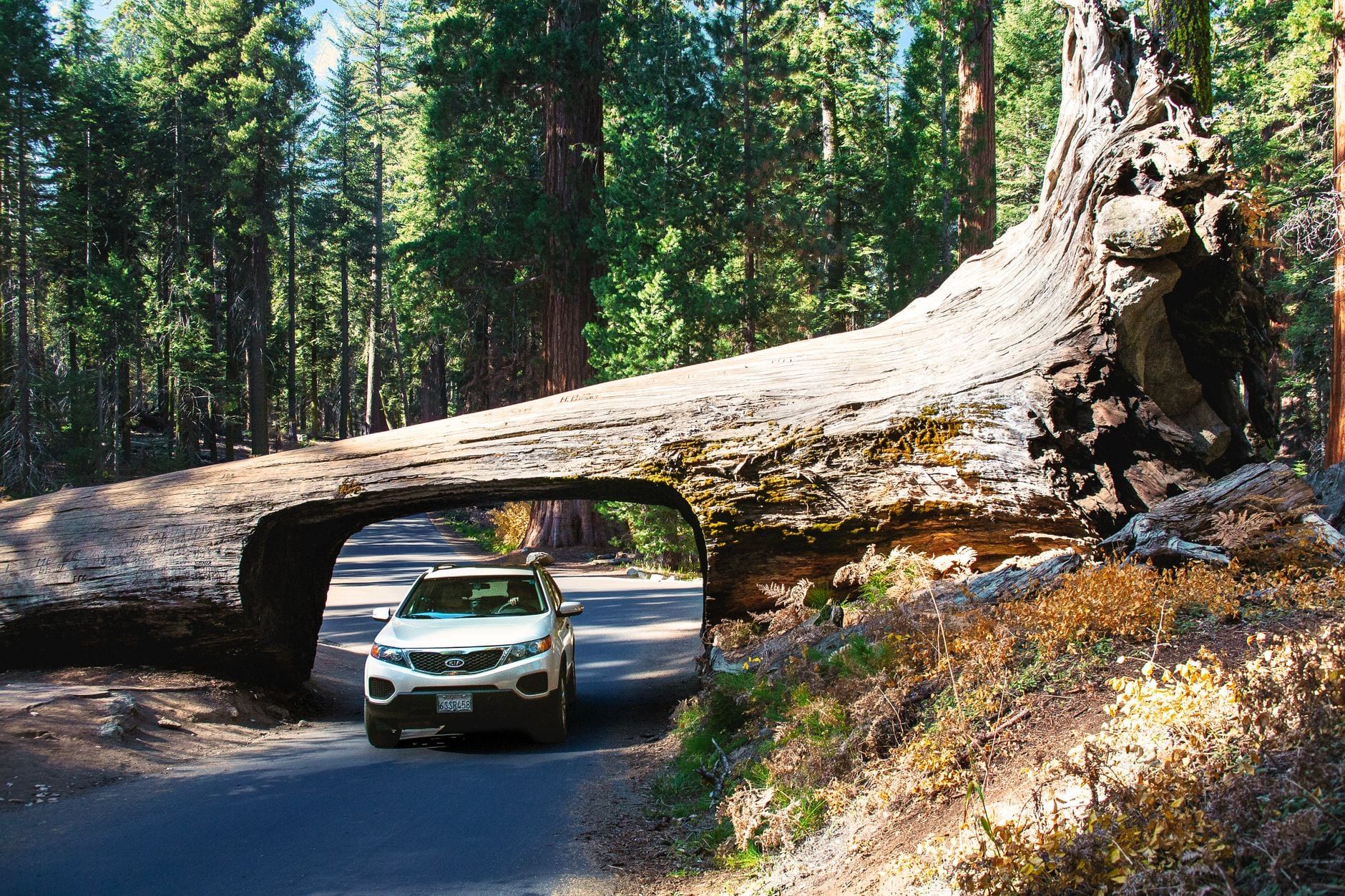
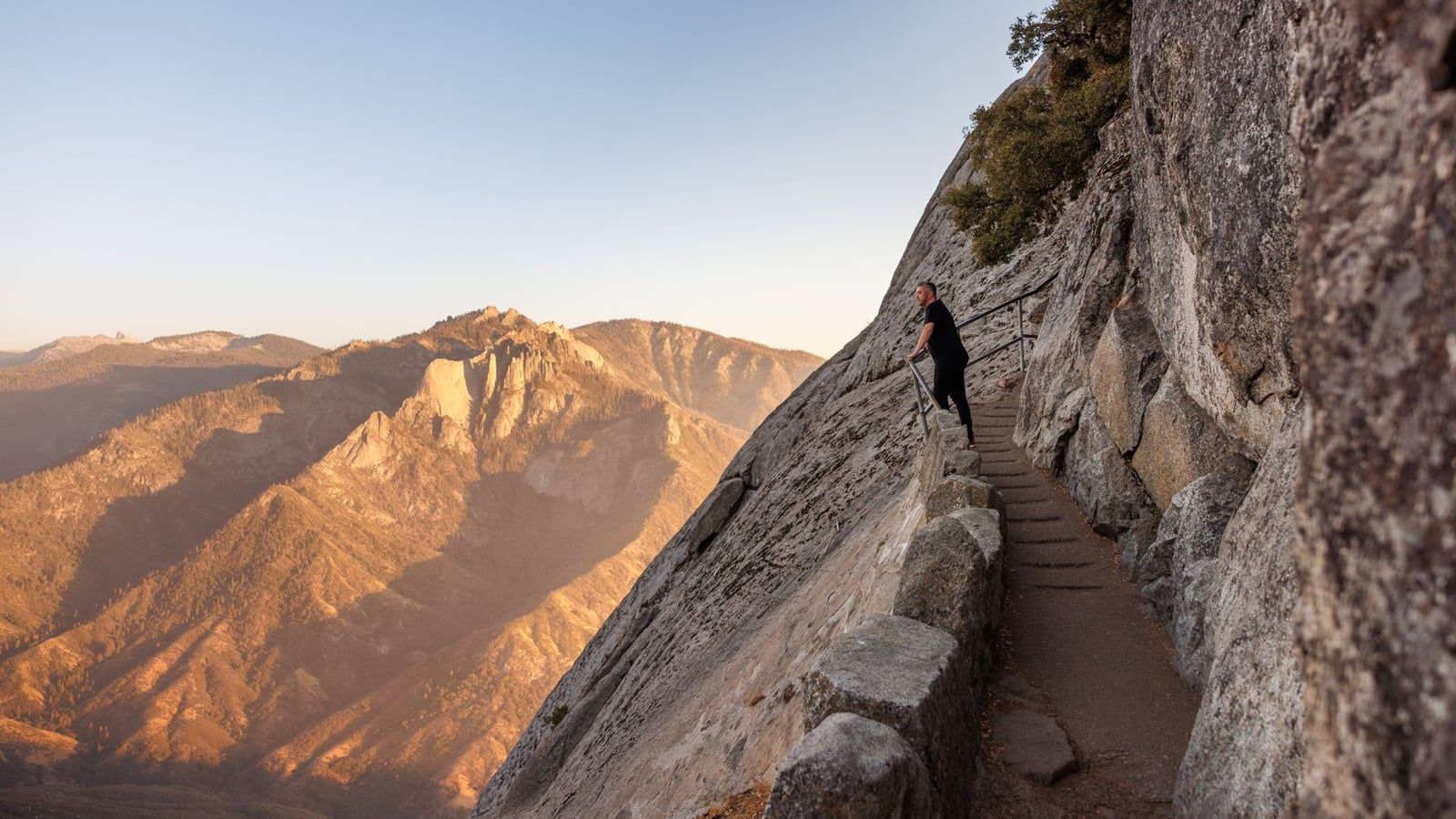
The headliners here are almost embarrassingly easy to reach. The General Sherman Tree sits at the end of a paved half-mile trail; the General Grant Tree — the second-largest in the world, in neighboring Kings Canyon — is likewise a short flat walk. The Congress Trail, a roughly 2-mile loop from Sherman, strings together named giants including the President Tree. Between groves, drive the Generals Highway, climb the 400 steps up the granite dome of Moro Rock for a 360-degree view of the Great Western Divide, and walk the Tunnel Log, a fallen sequoia you drive through. Underground, Crystal Cave runs 50-minute ranger tours through marble chambers — buy tickets in advance in Three Rivers. If you want more trail time, our guide to Sequoia's best hikes runs from boardwalks to Sierra summits, and the full things-to-do rundown goes deeper.
Redwood: groves you earn
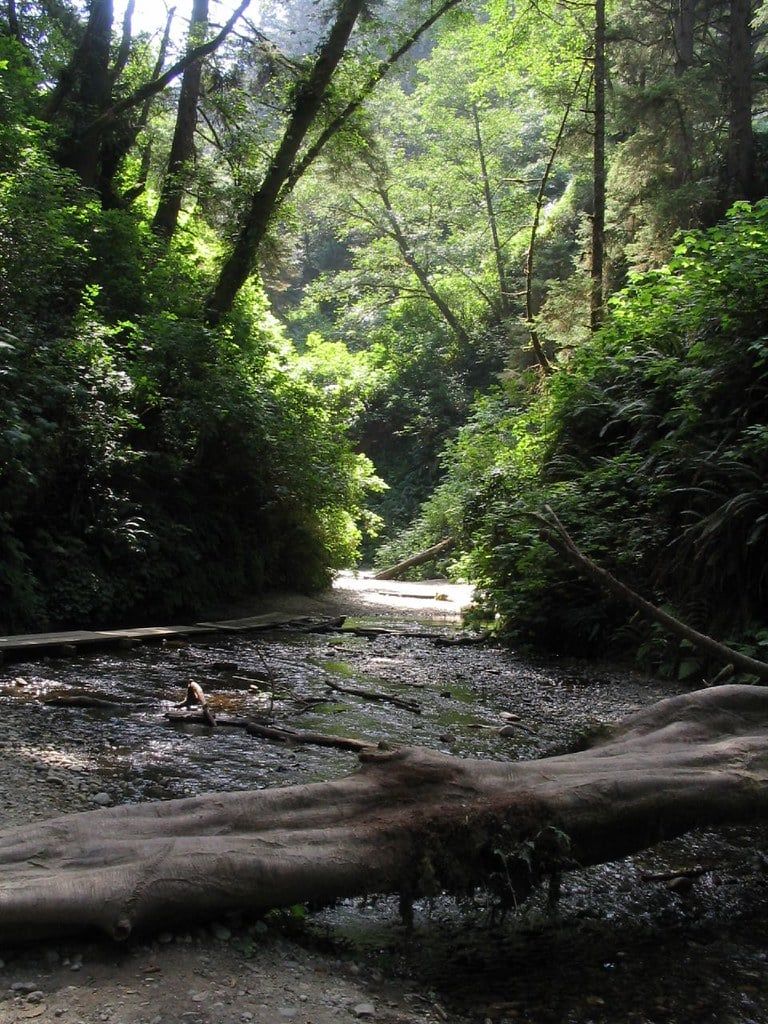
Redwood's signature stands ask for legwork. Stout Memorial Grove and the Grove of Titans sit behind one- to two-mile hikes, and Tall Trees Grove demands its permit and 4.5 miles. The payoff is forest that feels closer to how it's looked for a thousand years — dark, dripping, and empty. Drivers get their consolation in the Newton B. Drury Scenic Parkway, a 10-mile road through old growth that never touches a highway, one of the finest scenic drives in either park.
Beyond the trees
This is where the parks part company completely. The redwood side gives you the Pacific: Fern Canyon's fern-draped walls, tide-pool beaches, Roosevelt elk grazing in roadside meadows, and, farther north, the Trees of Mystery gondola and its decidedly roadside attractions. The sequoia side gives you the Sierra: the mountains above the groves, alpine wilderness on 866 miles of trail, and easy add-ons — Kings Canyon next door, and Yosemite, Death Valley, or Lake Tahoe within a few hours' drive.
Wildlife
Different forests, different casts. In the fog country you'll find Roosevelt elk, banana slugs on every damp trail, and black bears in the backcountry. In the Sierra it's black bears, coyotes, and mule deer, with mountain lions and bighorn sheep appearing rarely. Bears are the shared constant: both parks require proper food storage, and Sequoia fines visitors who skip the bear lockers.
Where to Stay and Eat
Sequoia is the only one of the two where you can sleep inside the park without a tent. Wuksachi Lodge sits in the sequoia country proper; the Kings Canyon side adds John Muir Lodge, Grant Grove Cabins, and the seasonal Cedar Grove Lodge. Outside the gates, Three Rivers has casual cafés and diners, while the more ambitious restaurants — Visalia's Vintage Press among them — sit about 40 minutes from the entrance.
Redwood has no hotels inside the park at all; camping is the only in-park bed. The realistic options are the motels, cabins, and inns of Orick, Klamath, and Trinidad, with Trinidad holding the best food on the coast. The trade is straightforward: Sequoia gives you convenience and a lodge bar at 7,000 feet; Redwood gives you a fog-bound cabin town and fish and chips near the harbor.
The Verdict: Which Park Should You Visit?
First-timers and families: Sequoia. Short paved trails, shuttle access, lodging in the groves, and the single most overwhelming tree on the planet. Photographers: Redwood, for fog shafts through 300-foot trunks and empty beaches — though Moro Rock at sunset argues otherwise. Hikers: Redwood, whose groves reward the legwork Sequoia's headliners don't demand — but hard-core backpackers belong in Sequoia's high country. Road-trippers: Sequoia, because Kings Canyon, Yosemite, and Death Valley all hang off the same Sierra loop. Winter travelers: Redwood, full stop — Sequoia's groves are snow-gated half the year.
Your starting city usually settles it. Coming from the Bay Area with time to spare, or driving the Pacific Coast Highway or down from Oregon, Redwood is on your way. Coming from Los Angeles, San Diego, or Las Vegas, Sequoia is the obvious pick — about 4 hours from LA against 10-plus to the redwood coast.
Seeing both takes a real road trip, not a detour. With 300-plus miles and at least five hours of driving between them, budget 3–4 days minimum. Two routings work: San Francisco to the north-coast redwoods, then east across to Sequoia and back; or Los Angeles or Las Vegas to Sequoia, then northwest to finish in San Francisco. Time-wise, one full day covers Sequoia's highlights (add a half day for Kings Canyon), and Redwood's groves plus the coast want two.
Frequently asked questions
Are sequoias and redwoods the same tree?
No. Both are redwoods in the loose sense — same subfamily, Sequoioideae — but they're different species: the coast redwood is Sequoia sempervirens and the giant sequoia is Sequoiadendron giganteum. Giant sequoias were once called "Sierra redwoods." Quick field tell: redwood cones are under an inch long; sequoia cones are the size of a chicken egg.
Which is taller, a redwood or a sequoia?
Redwoods. Coast redwoods reach about 380 feet (Hyperion, the record holder, is 379.7 feet); the tallest giant sequoia is about 311 feet. But sequoias are the largest trees on Earth by volume — General Sherman holds 52,508 cubic feet of trunk and is more than 36 feet across at the base.
Which is better to visit, Sequoia or Redwood National Park?
It depends on the trip. Sequoia wins on sheer mass you can stand next to, flat trails to famous trees, in-park lodging, and connections to Kings Canyon and Yosemite. Redwood wins on solitude, coastal scenery, longer hikes, zero entrance fee, and year-round access.
Can you visit Sequoia and Redwood in one trip?
Yes, but they're over 300 miles apart with at least five hours of driving between them, so plan on 3–4 days minimum. Realistic routings: San Francisco → redwood coast → Sequoia → back to SF, or LA/Las Vegas → Sequoia → northwest to San Francisco.
How much does it cost to enter each park?
Redwood National and State Parks has no entrance fee, though some state-park sections (like Fern Canyon) charge about $12 for day-use parking. Sequoia & Kings Canyon charges $35 per private vehicle (valid 1–7 days), $30 per motorcycle, or $20 per person on foot or bike; the park is cashless, and non-US residents 16+ pay an additional $100 per person.
When is the best time of year to visit each park?
Sequoia: May through October, when the whole park is open — summer highs in the 80s °F, and July–August the most crowded. Snow can close roads and grove access November through April. Redwood: any month, with mild 50–60s °F temperatures, fog, and rain possible even in summer.
How many days do you need in each park?
One full day covers Sequoia's highlights; add a half day if you'll also visit Kings Canyon. Redwood needs about two days to cover its major groves plus the coast. Two separate short visits usually beat one rushed combination trip.
Do you need a permit to see the tallest trees?
At Redwood, Tall Trees Grove requires a free timed-entry permit plus a 4.5-mile round-trip hike with 800 feet of elevation change. Hyperion, the world's tallest tree, has no legal access — its location is kept secret and hikers who seek it out face fines. Sequoia requires no permits for its famous trees.