Choosing between Sequoia and Yosemite comes down to one trade: granite views or giant trees. Yosemite has Half Dome, El Capitan and a 2,425-foot waterfall, and about 4.2 million people a year come to look at them. Sequoia has the General Sherman Tree — the largest tree on Earth by volume — with roughly a third of the visitors. No road crosses the Sierra between the two parks, so most trips pick one. This guide compares them on scenery, crowds, hiking, kids, costs and time, so you can decide with your dates, starting city and group in mind.
A note before the comparison: Sequoia borders Kings Canyon National Park, and the two are managed as one unit. Some visitor numbers below combine them, because that's how the parks report. It rarely changes the verdict — it just means a Sequoia ticket buys more than one park.
Sequoia National Park vs Yosemite at a Glance
Go to Yosemite if the trip is about the views — Half Dome, El Capitan, Tunnel View, waterfalls you can hear from the road — and you have two to four days for its large trail network. Go to Sequoia if the trip is about the trees: the Giant Forest is the largest unlogged sequoia grove on Earth, its headline sight sits at the end of a paved walk, and you can cover the core in one full day. Sequoia also wins on crowds, with about 1.3 million annual visits against Yosemite's 4.2 million, and it's the closer park if you're starting from Los Angeles.
| Sequoia | Yosemite | |
|---|---|---|
| Annual visitors | ~1.3M (2M with Kings Canyon) | ~4.2M in 2025 |
| Signature sights | General Sherman Tree, Giant Forest, Moro Rock | Half Dome, El Capitan, Yosemite Falls |
| Hiking | Short paved loops with big payoffs | Harder full-day trails, more variety |
| Winter access | Generals Highway open (chains when snowy) | Valley open; Tioga and Glacier Point roads closed |
| Entry fee | $35/vehicle, 7 days (includes Kings Canyon) | $35/vehicle, 7 days |
| Best for | Families, short trips, SoCal starts | Hikers, photographers, 3+ day trips |
- Standing beside the largest tree on Earth is the point of the trip
- You want roughly a third of Yosemite's crowds
- You have one or two days, not four
- You're starting from Los Angeles or Southern California
- You're traveling in winter — the big trees stay reachable
- Waterfalls and granite walls are the priority
- You want full-day hikes like Half Dome or Clouds Rest
- You want a choice of in-park lodges and real dining
- You're starting from San Francisco or Sacramento
- Photography is a main goal of the trip
Doing both is realistic once you have five days. The parks sit about 175 miles apart — four to five hours of driving either way, looping through Fresno because no road crosses the Sierra crest between them. The full routing is covered at the end of this guide.
Landscape and Signature Sights: Granite Icons vs the World's Largest Trees
The scenery comparison is really a choice between a famous view and a famous tree. Everything else follows from it.
Yosemite: granite walls and falling water
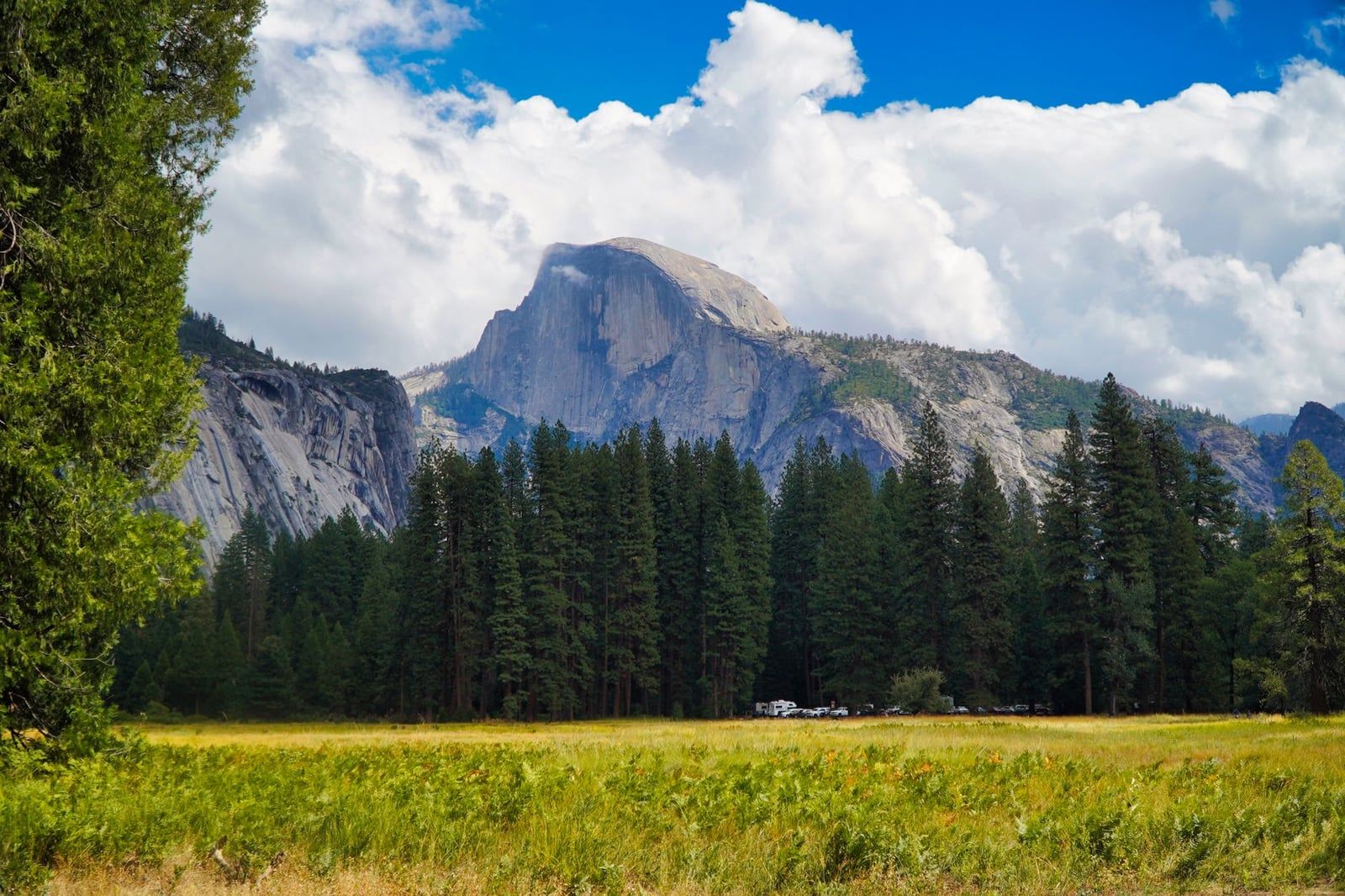
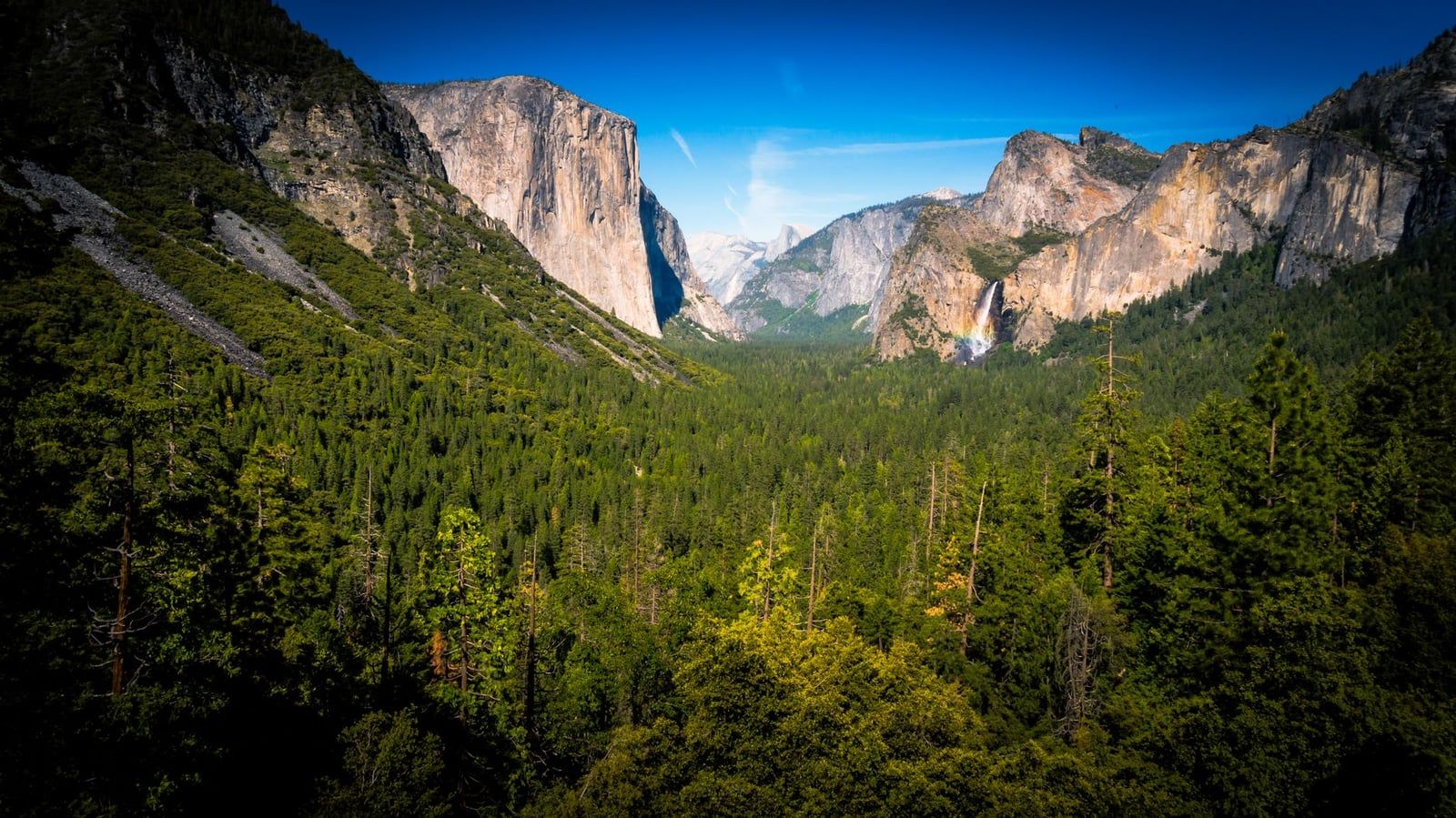
Yosemite Valley is the sight. Half Dome and El Capitan frame a glacier-carved valley, and you can see both from Tunnel View without leaving your car. Bridalveil Fall greets you near the entrance; Yosemite Falls drops 2,425 feet in three tiers, the tallest waterfall in the park and one of the tallest anywhere. Glacier Point looks down on all of it. Most of this is visible from roadside overlooks and short paved walks, which is exactly why the crowds come.
Sequoia: the world's largest trees
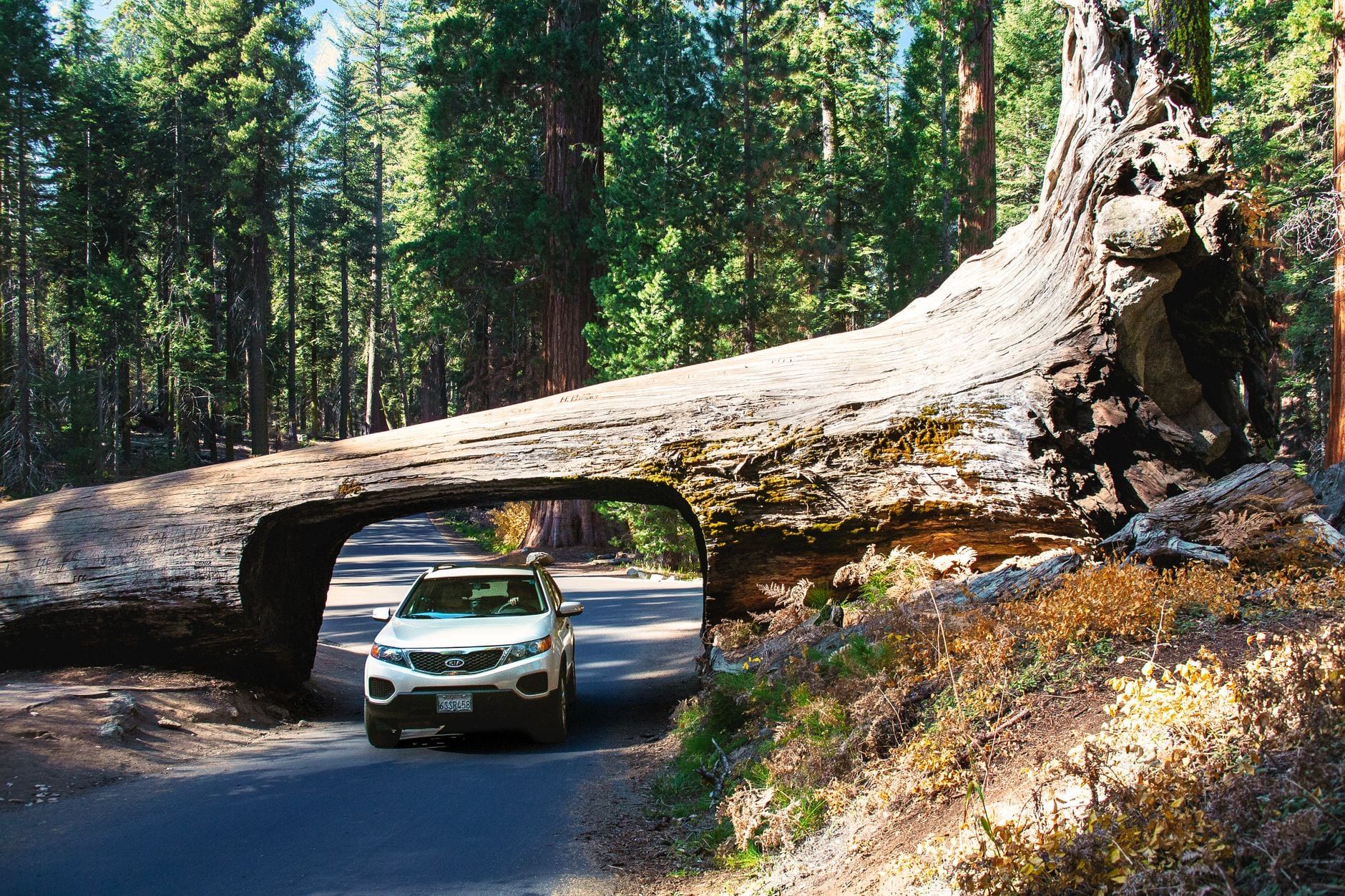
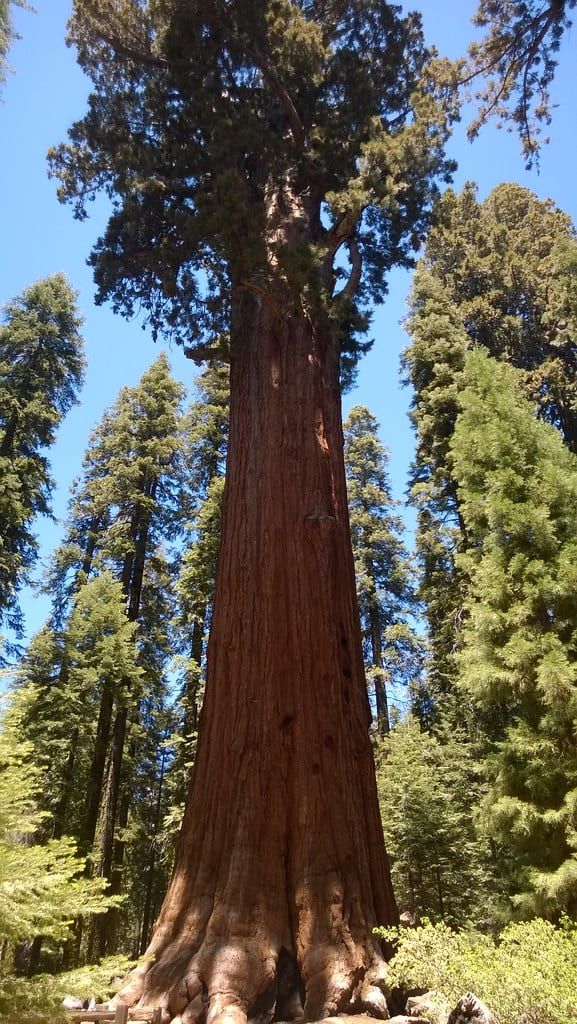
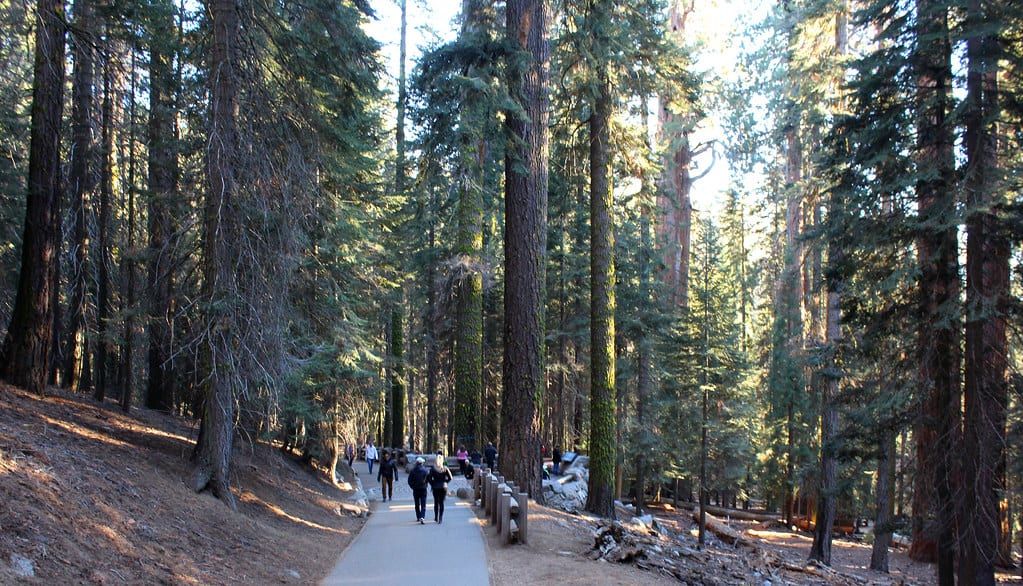
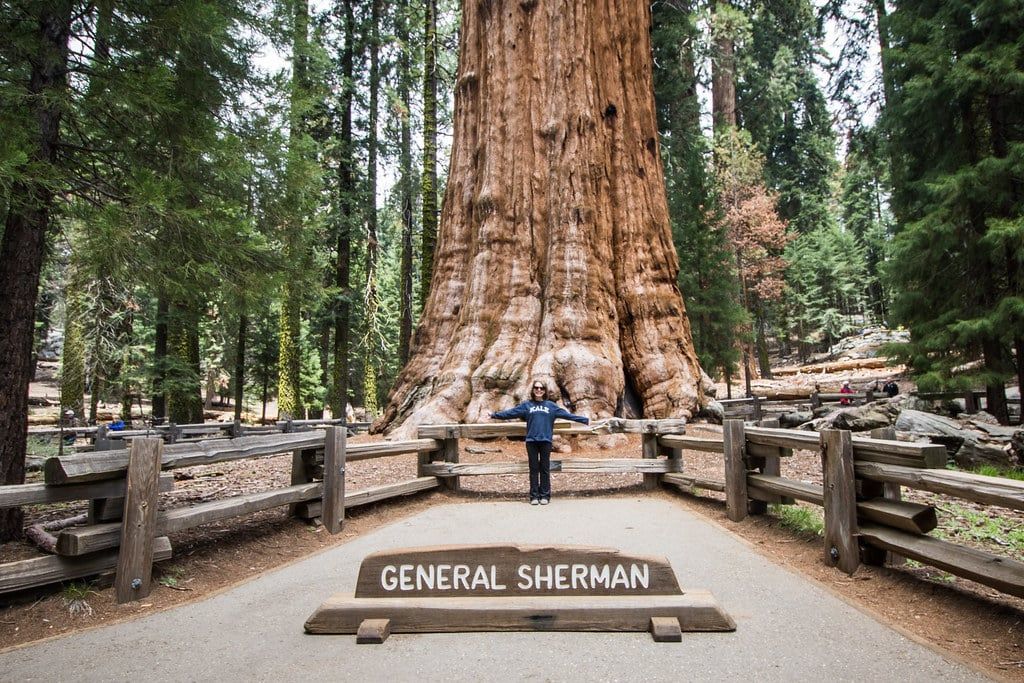
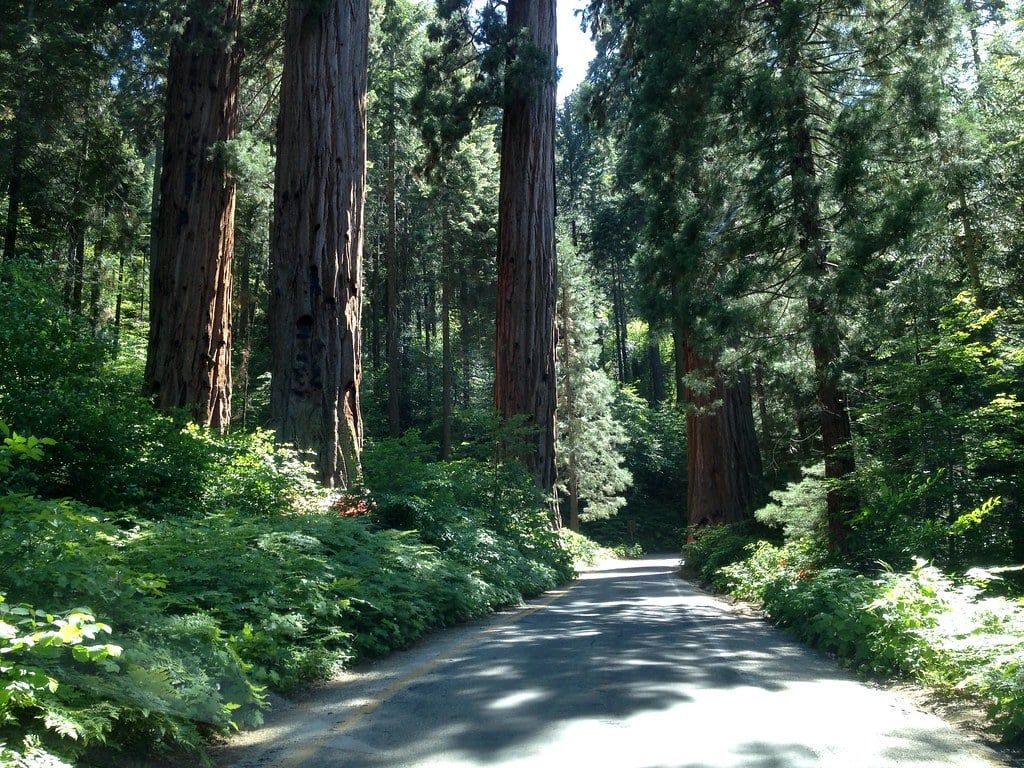
The Giant Forest is the largest unlogged sequoia grove on Earth. Its centerpiece, the General Sherman Tree, stands 274.9 feet tall with a trunk volume of 52,508 cubic feet — the largest known living tree by volume — and a short paved trail of about a third of a mile puts you at its base. Moro Rock, a 6,725-foot granite dome, supplies the park's one big panorama: roughly 400 stone steps up, and the Great Western Divide opens in front of you. Crescent Meadow, the drive-through Tunnel Log and the marble passages of Crystal Cave fill out the list.
The Mariposa Grove caveat
Yosemite has its own sequoias. Mariposa Grove, near the South Entrance, holds more than 500 mature giants, including the Grizzly Giant and the California Tunnel Tree, and a shuttle serves it in the warmer months. But it's one grove among Yosemite's many attractions, and the shuttle pauses from late November until about April 1. If sequoias are the reason for the trip, Sequoia gives you a whole forest of them on foot; Mariposa gives you a taste between waterfalls.
The parks feel different on the ground. Yosemite is open and vertical — meadows, walls and falling water concentrated in one valley. Sequoia climbs: elevations run from 1,370 feet in the foothills to 14,494 feet at Mount Whitney, the highest point in the contiguous United States, so the drive in passes through several climates before you reach the groves.
Wildlife is close to a wash. Black bears, mule deer and bobcats live in both parks, and your best odds come early and late in the day in the meadows — Cook's Meadow in Yosemite Valley, Crescent Meadow in Sequoia. Both parks require food in bear lockers and fine you for sloppy storage. For what you might actually see and where, our guide to wildlife in Sequoia goes deeper.
On paper, the parks are peers. Yosemite covers 747,956 acres and has been a UNESCO World Heritage Site since 1984. Sequoia and Kings Canyon together span 865,964 acres, protect more than 200 caves and hold an International Biosphere Reserve designation. Designations won't pick your park. The scenery will.
Crowds, Timing and Which Park Is Better Each Season
The raw numbers first. Yosemite counted about 4.2 million visitors in 2025, its fourth-busiest year on record. Sequoia and Kings Canyon together set their own record in 2024 with roughly 2 million visits, Sequoia alone accounting for about 1.3 million. Yosemite absorbs roughly twice the people, and nearly three-quarters of its year lands between May and October.
Crowding feels different in each park. Yosemite's crush spreads across a whole valley of competing attractions — parking, shuttles, trailheads — but the valley is large. Sequoia's congestion funnels into the small Giant Forest area, where the Sherman Tree lot and Moro Rock pullout fill by mid-morning in summer. The fix at Sequoia is the free summer shuttle; the fix at Yosemite is arriving before 8 a.m. or traveling in shoulder season.
Spring splits the decision. Snowmelt puts Yosemite's waterfalls at full throttle from April through June — this is when Yosemite Falls thunders. Sequoia's foothills fill with wildflowers at the same time, but rivers run fast, cold and dangerous with meltwater, and late storms can still dust the high country.
Summer is peak season at both, and neither park is quiet — Yosemite Valley is simply the more intense experience, with lines for parking and shuttles. Fall is the insider's season at either: Sequoia's groves thin out by late September, mornings drop toward freezing there, and Yosemite's waterfalls slow to a trickle by August even as the hiking stays dry and quiet.
Winter favors Sequoia. Generals Highway stays open to the Giant Forest all year, with tire chains required during storms, so you can stand under the Sherman Tree in January — though the Moro Rock road, Crescent Meadow Road and Crystal Cave close for the season. Yosemite Valley also stays open, but Tioga Road and Glacier Point Road close and the Mariposa Grove shuttle stops from late November until about April 1, leaving the valley plus snowplay. Our guides to the best time to visit Sequoia and Sequoia in winter cover the details.
Match the month to the park: waterfalls in May and June point to Yosemite; quiet trails from September through October work at either; snow-season trips from November to March point to Sequoia.
Hiking Compared: Difficulty, Signature Trails and Permits
Yosemite is the bigger, harder hiking park. The Mist Trail is the classic: about 7 miles round trip past Vernal Fall (317 feet) and Nevada Fall (594 feet), gaining around 1,900 feet on granite steps that are slick with spray in spring. The Yosemite Falls Trail climbs toward the top of the 2,425-foot falls, Mirror Lake is an easy family walk, and Clouds Rest is a long, exposed summit day that many locals rank above Half Dome for the view.
Half Dome is the hike Sequoia cannot match — a 14-to-16-mile round trip to a bare granite crown, requiring a permit from a lottery, with the cable route in place only from May through October. If Half Dome is on your list, the decision is already made.
Sequoia trades distance for payoff. The Congress Trail is a paved, roughly two-to-three-mile loop from the Sherman Tree through the heart of the Giant Forest — flat, shaded, doable with a preschooler. Tokopah Falls is a moderate four-mile river walk to a 1,200-foot waterfall, and longer objectives like Alta Peak and the Watchtower push into real Sierra terrain. Behind them sit 866 miles of trail, including 87 miles of the John Muir Trail and 108 miles of the Pacific Crest Trail. Our guide to the best hikes in Sequoia breaks them down by difficulty.
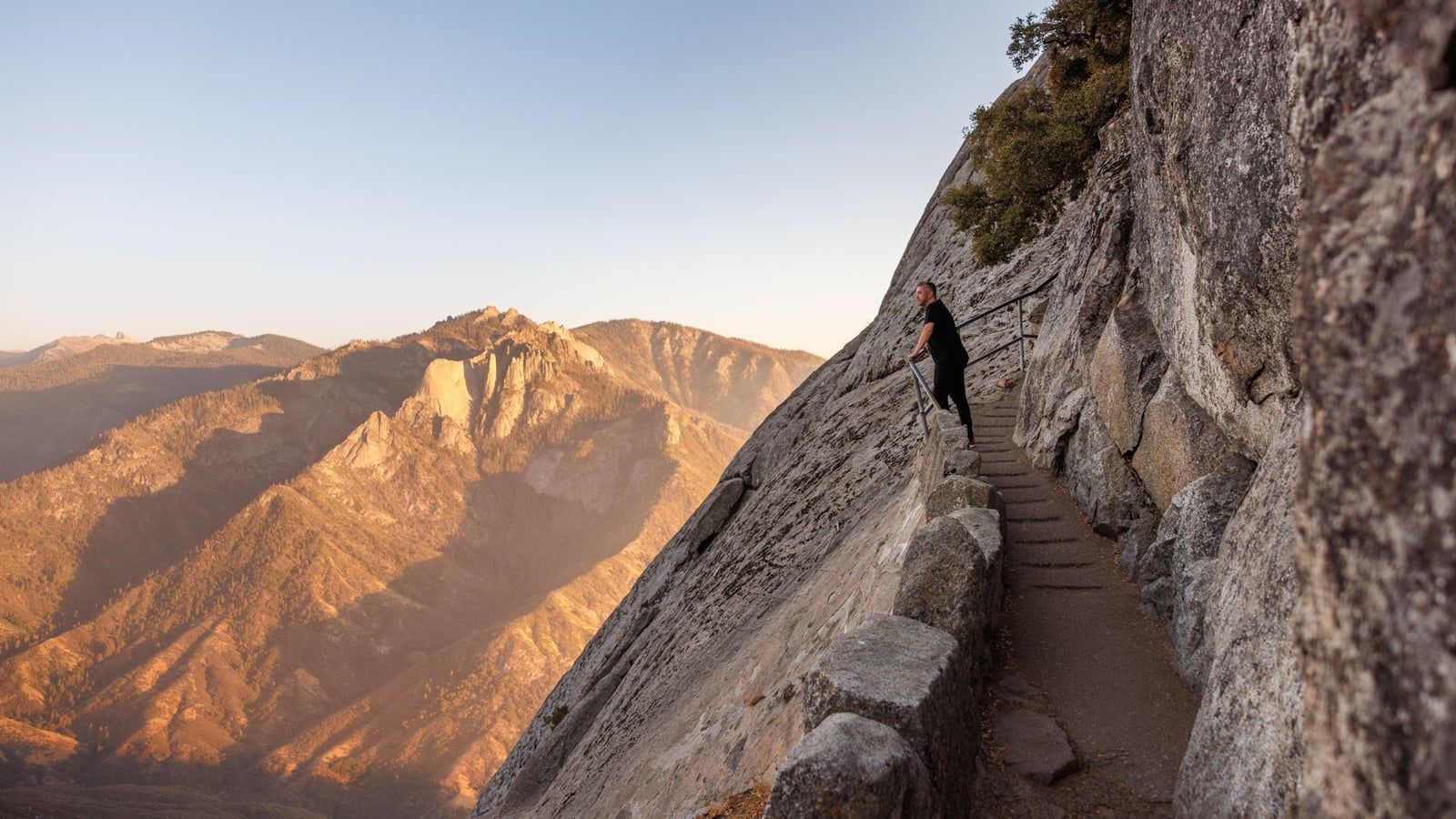
Moro Rock is Sequoia's hike for people who don't hike: about 400 stone steps in a quarter mile, up a bare granite dome with open drop-offs on the turns. Twenty minutes of effort, a panorama of the Great Western Divide. The verdict on the parks is simple — a full day of serious hiking belongs in Yosemite; the most scenery per mile belongs to Sequoia.
Visiting With Kids: Which Park Is Easier for Families
Sequoia is the easier park with small children. The walk to the General Sherman Tree is paved and short enough for a four-year-old, the Congress Trail extends the loop past more named giants, and the Giant Forest Museum sits right there for an hour indoors. Both parks run Junior Ranger programs, with badges for finished activity books.
Yosemite answers with flat valley walks. The Lower Yosemite Fall loop and Cook's Meadow loop are both under 1.5 miles and level — one ends at the base of a 2,425-foot waterfall, the other faces Half Dome across a meadow. Add biking the valley floor and Mirror Lake, and older kids have more variety here than anywhere in Sequoia.
Two cautions, though. Moro Rock's stairway has unprotected drop-offs on some turns — hold small hands, and skip it in wind or ice. On Yosemite's Mist Trail, the granite steps above the Vernal Fall footbridge run wet and slick with spray in spring; young kids are safer turning around at the bridge.
The family verdict: with kids under about ten, Sequoia is the easier win — bigger payoff, less logistics. With kids old enough to hike a few miles, Yosemite's variety wins out.
Getting There, Entry Fees and Where to Stay
Your starting city matters more than any ranking. Fresno Yosemite International (FAT) is the one airport that serves both parks: under two hours to Sequoia's Ash Mountain entrance, roughly two hours to Yosemite. From Los Angeles, Sequoia is a 225-mile drive of about four hours; from San Francisco, Yosemite runs three and a half to four and a half. Rule of thumb: a Southern California start favors Sequoia, a Bay Area start favors Yosemite. For routes and transit options, see our page on how to get to Sequoia.
Entry costs are identical: $35 per private vehicle, valid for seven days. The difference is what the ticket buys — a Sequoia pass also covers Kings Canyon and the adjoining Hume Lake district, so it's effectively two parks for one fee. Frequent visitors do better with the $80 America the Beautiful annual pass. One change for 2026: both parks charge non-U.S. residents 16 and older an extra $100 per person, on top of the vehicle fee, unless someone in the car holds an annual pass. Both parks also run free-entrance days through the year, and Sequoia's entrance stations take card only — no cash. Current details are on our hours and entry fees page.
Reservations: neither park requires a vehicle or entry reservation in 2026, so you can decide the morning of. The one booking that matters at Sequoia is Crystal Cave. The roughly $20 ranger-led tour reopened in 2025 after five years closed, tickets are sold only in advance, and past seasons have sold out. At Yosemite, the Half Dome permit lottery is the only hike that needs advance luck. Our Crystal Cave tours guide covers tickets and what to expect.
Shuttles and parking split the difference. Yosemite runs a free valley shuttle linking trailheads, lodges and viewpoints. Sequoia runs free shuttles around Giant Forest and Lodgepole in summer — and you'll want them, because parking near the Sherman Tree and Moro Rock is the park's genuine pinch point on summer weekends.
Sleeping is where Yosemite's scale shows. Inside its boundaries are the Ahwahnee, Yosemite Valley Lodge, the Wawona Hotel and Curry Village, with gateway rooms in El Portal, Big Oak Flat and Fish Camp. Sequoia has exactly one in-park lodge, Wuksachi; otherwise you're looking at Three Rivers, about an hour from the groves, or Visalia. Book in-park rooms at either park months ahead.
Camping is nearly even: Sequoia has 14 campgrounds, Yosemite 13, and Yosemite's fill to capacity year-round. Summer sites at both vanish fast on recreation.gov — set an alert for the day reservations open rather than gambling on a walk-up.
How Many Days You Need — and Whether to Do Both
Sequoia's core — General Sherman, the Congress Trail, Moro Rock, Crescent Meadow — fits comfortably in one day and fills two with a longer hike or Crystal Cave. Yosemite realistically needs two days for the valley and Glacier Point alone, and three to four if you add Mariposa Grove and Tioga Road in summer. A three- or four-day weekend belongs to one park; five or more days opens up both.
To do both, drive through Fresno in either direction: about 175 miles and four to five hours, because no road crosses the Sierra between them. A common split is two days in Sequoia and four in Yosemite. And since the Sequoia entrance ticket also covers Kings Canyon, which sits between the two, a loop trip can add a third park — home to the General Grant Tree, the second-largest tree in the world — with almost no extra driving. Our guide to the drive from Yosemite to Sequoia has the full routing and stop suggestions.
Frequently asked questions
Is Yosemite or Sequoia National Park better?
Neither, objectively. Yosemite is the pick for granite landmarks, waterfalls, serious hiking and a deep bench of lodges and services. Sequoia is the pick for the world's largest trees, far smaller crowds, an easier one-to-two-day visit and shorter drives from Southern California. Frame it as big views versus big trees, then let your trip length and starting city decide.
Which park is less crowded, Yosemite or Sequoia?
Sequoia, by a wide margin. Yosemite drew about 4.2 million visitors in 2025, its fourth-busiest year on record; Sequoia drew about 1.3 million, or roughly 2 million combined with Kings Canyon in its record 2024. Sequoia's congestion also concentrates in the small Giant Forest area rather than a whole valley, and the free summer shuttle absorbs much of it.
Can you visit Yosemite and Sequoia in one trip?
Yes, and many people do. There's no road across the Sierra between them, so the drive is about 175 miles and four to five hours looping through Fresno either way. Budget at least one full day per park, and consider adding Kings Canyon between the two — it's covered by the same entrance ticket.
How many days do you need in Sequoia vs Yosemite?
One to two days covers Sequoia's core sights — General Sherman, Moro Rock, the Congress Trail and Crescent Meadow — with a second day for a longer hike or Crystal Cave. Yosemite needs two to four days to do the Valley, Glacier Point, Mariposa Grove and Tioga Road justice.
Which is better for young kids, Sequoia or Yosemite?
Sequoia, for younger kids: the paved walk to the General Sherman Tree and the flat Congress Trail put preschoolers beside the biggest trees on Earth. Yosemite's Lower Yosemite Fall and Cook's Meadow loops are comparable and flat. Two cautions either way — Moro Rock's exposed 400 steps, and the wet granite steps on the Mist Trail above the Vernal Fall footbridge.
Which park is better to visit in winter?
Sequoia. Generals Highway stays open to the Giant Forest all year, chains permitting, so the big trees remain reachable. In Yosemite, Tioga Road and Glacier Point Road close for the season and the Mariposa Grove shuttle stops from late November until about April 1, leaving the valley and snowplay as the main options.
Do you need a reservation to enter Yosemite or Sequoia?
No. Neither park required a vehicle or entry reservation in 2026, though rules can change seasonally, so confirm on nps.gov before you go. The exceptions: Sequoia's paid Crystal Cave tour (about $20) must be booked ahead and has sold out in past seasons, and Yosemite's Half Dome permit is drawn by lottery.